
I love bats, and have been lucky to see quite a few in the US, Canada, Mexico and Central America. But one I would love to see are the “flying foxes of SE Asia. But as the human population has grown exponentially over the years these animals, along with many others are brought into closer contact with humans. Some of this is due to climate change, but a primary close is a loss of habitat. These events have lead to SARS (jumped from bats and pangolins to humans) and MERS (jumped from camels to humans).
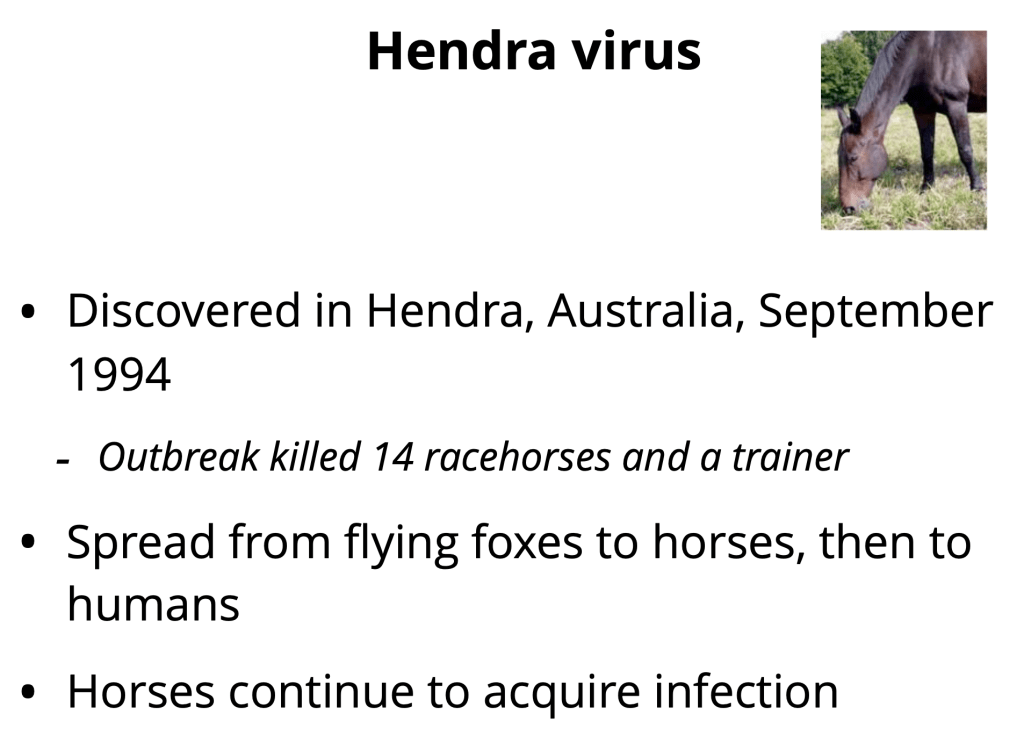
Now there is hendravirus, which has jumped from flying foxes to horses and humans in Australia.
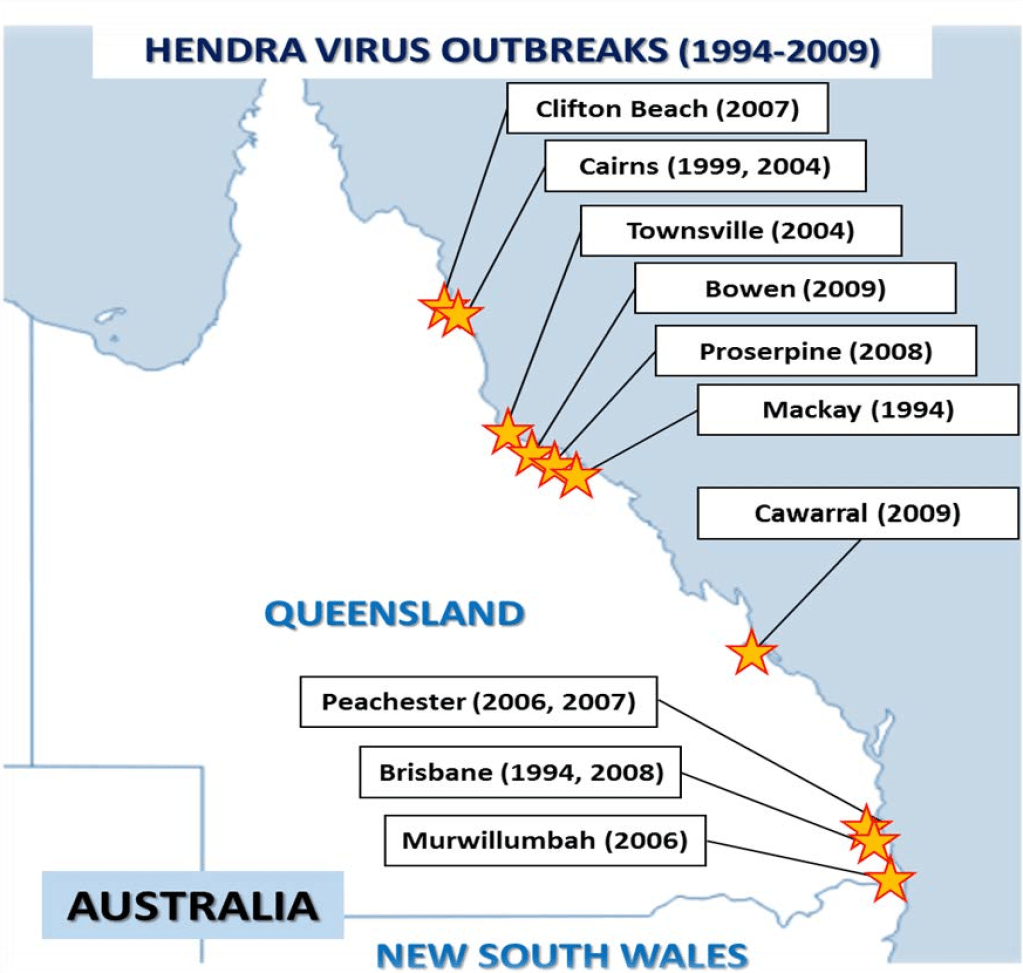
Most outbreaks of hendravirus in horses (and to a lesses extent humans) had been in Queensland, Australia.

Viruses jumping from flying foxes to horses peak in the southern hemisphere winter, June through September, although other outbreaks do occur as early as March and late as December.

The death rates from a hendravirus infection are rather high. But the chances of getting the virus is rather low, at least for humans.
Tomorrow, back to snow, birds and Whitefish Point.
 Michael's Place
Very interesting! I spent every night in Cairns sitting out on my balcony and watching the flying foxes below me. Between that and listening to the stone Curlew cries and the ocean sounds, it was heaven! They also have a very interesting call. I love seeing them in the trees and flying around. They are magnificent! One of the highlights of my trip!
LikeLike
Yes, it sounds spectacular. Something that I would like to see sometime in the future.
LikeLike