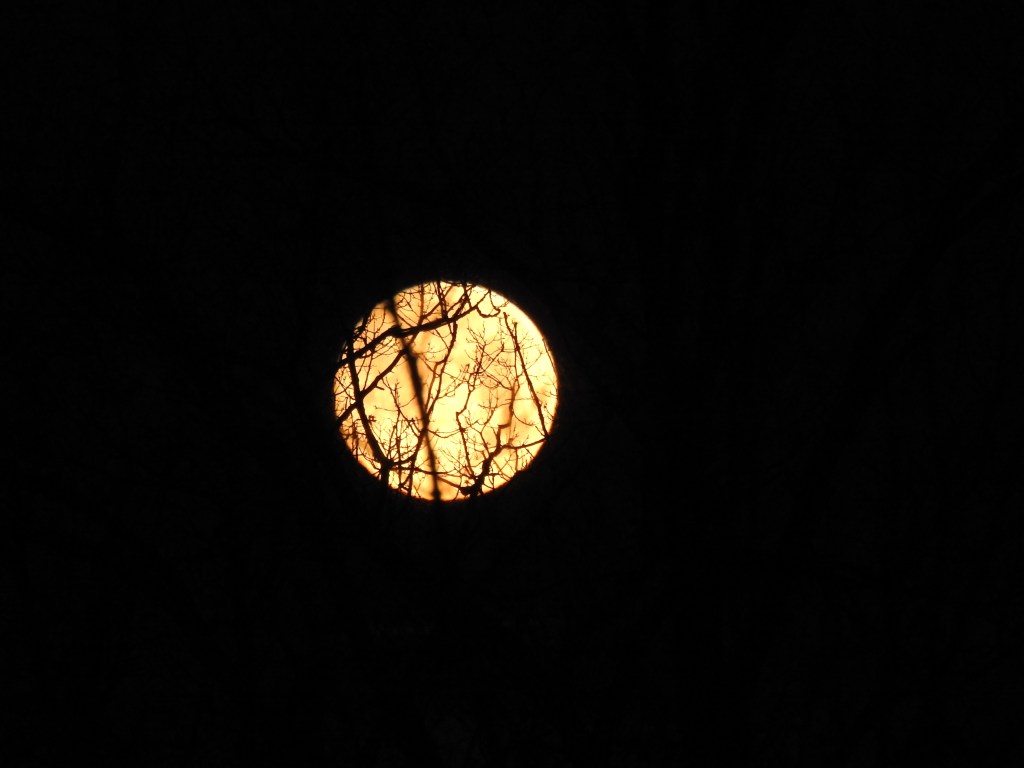
Moon set yesterday. It’s often early in the morning when I sit and read or write about whatever I’m thinking about. Yesterday morning it was about an article that I had read.
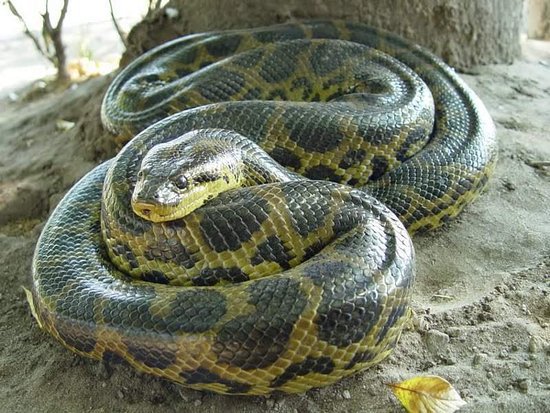
It turns out that the “green anaconda” is actually two species. Visually, even with measurements they cannot be differentiated. Just try to image all of the specimens in museums. Here’s an animal that can reach over 20 feet and close to 1,000 pounds. Still, without modern genetic techniques two species could not be separated.
Now it appears that the two species, Eunectes murinus (green anaconda) and Eunectes akayima (northern green anaconda) have “almost” separate ranges. The green anaconda occurs in Peru, Bolivia, Brazil and French Guiana. The northern green anaconda occurs in Ecuador, Columbia, Venezuela, Trinidad, Guyana, Surinam and French Guiana.
The two species apparently became separate species approximately 10 million years ago and have 5.5% different genes.
So, for those of you sho keep track of what you are seeing in nature now is the time to check on which species you have seen.
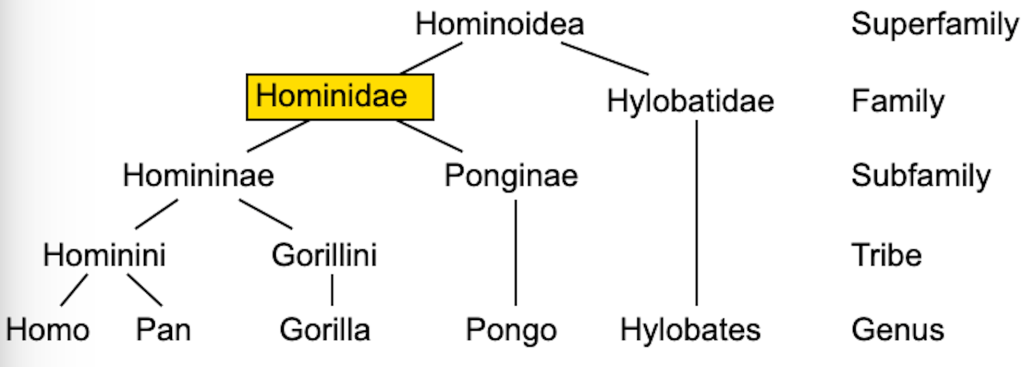
So, anacondas, with their 5.5% genetic difference are impossible to differentiate. What about other, more genetically similar species? Like humans and chimpanzees.
It turns out that humans and their closest relatives are approximately 2% different genetically.
It was some 30 years ago that I read The Third Chimpanzee by Jared Diamond (1991).

The book talks about the similarities and differences among the closely related great apes: chimpanzees, bonobos and humans.
The book is an interesting read and takes me back to my anthropology roots in school where I studied primates before switching over to birds back in the 1970s.
That’s all for today, more later…
 Michael's Place