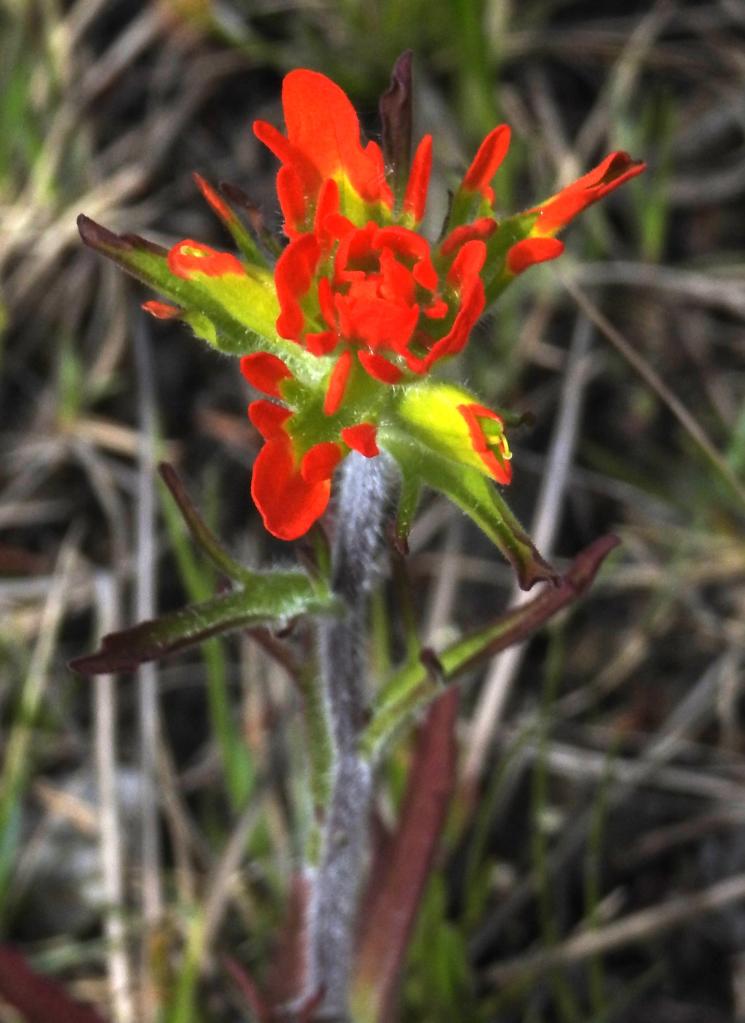
We spent yesterday looking for several orchids that are difficult to find since they are small and live in wet cedar woods. Just getting to them required over and hour of walking. But on the way to finding them we found may other interesting plants, such as the above Indian paintbrush.
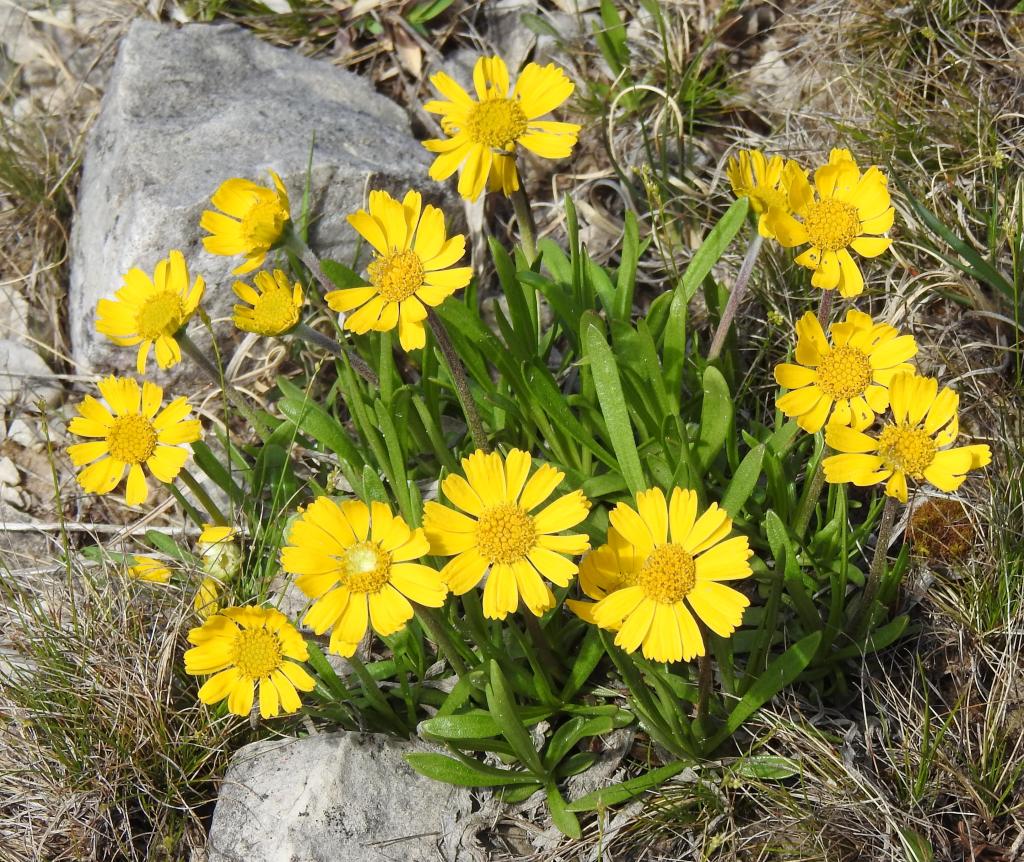
Close to the Indian paintbrush is a large patch of Lakeside daisy, which is another nice little plant.
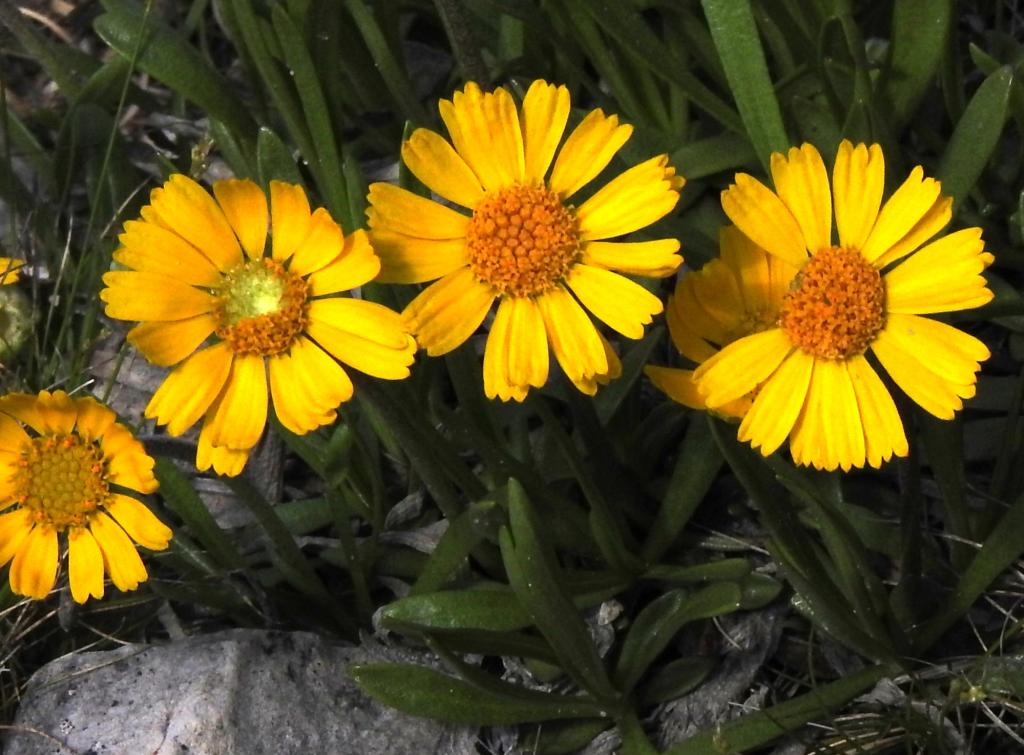
Getting close to the daisy’s allows you to see some of the water droplets still on them early in the morning. This would be our driest part of the day as we headed into the wet woods.
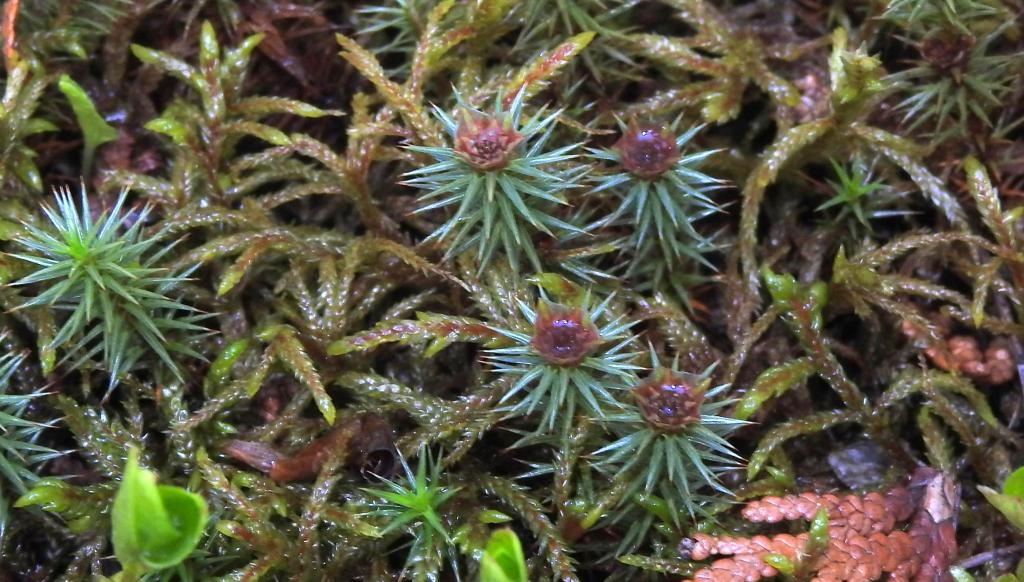
The diversity of mosses in these woods is quite amazing. But there are still more little plants to be seen. All of these are under 20mm tall.

Bazzazia trilobata, a liverwort was covering some small woody stumps and hummocks.
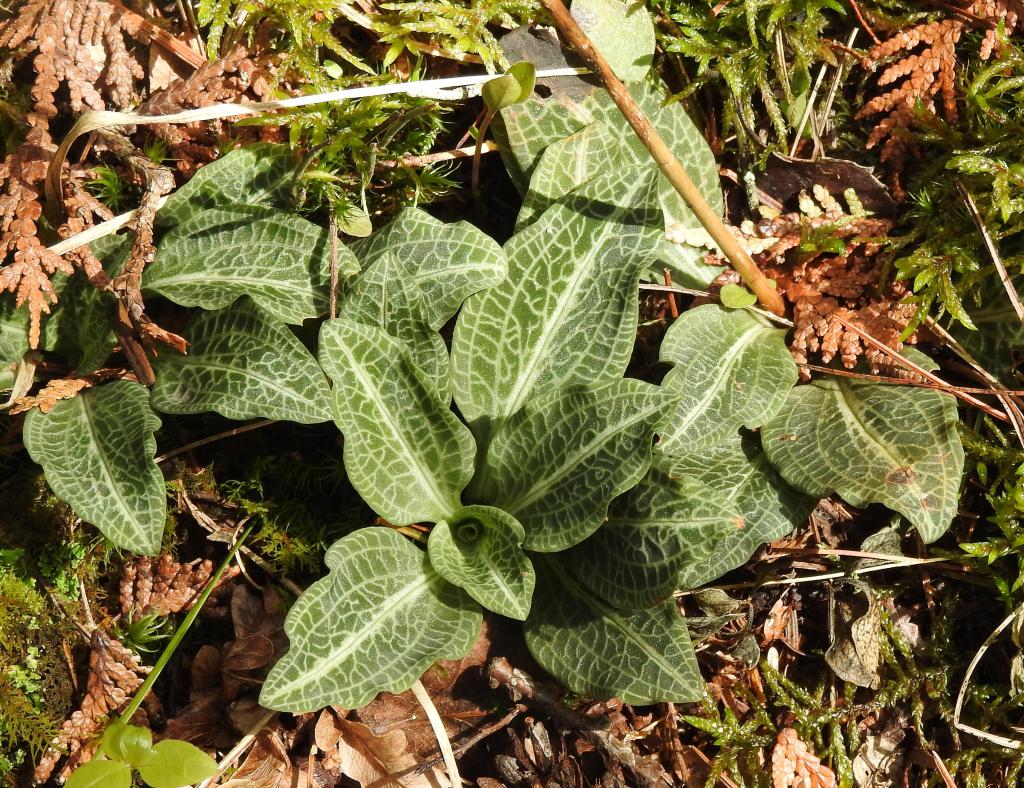
Close to an hour into searching we found our first (non-flowering yet) orchids. These were Downy rattlesnake-plantain. They still have a month or more before blooming.

Between little patches of interesting plants, mosses and liverworts there are other things to see. This is an extensive patch of Peltigera lichens. Without proper reference material these are impossible to identify.
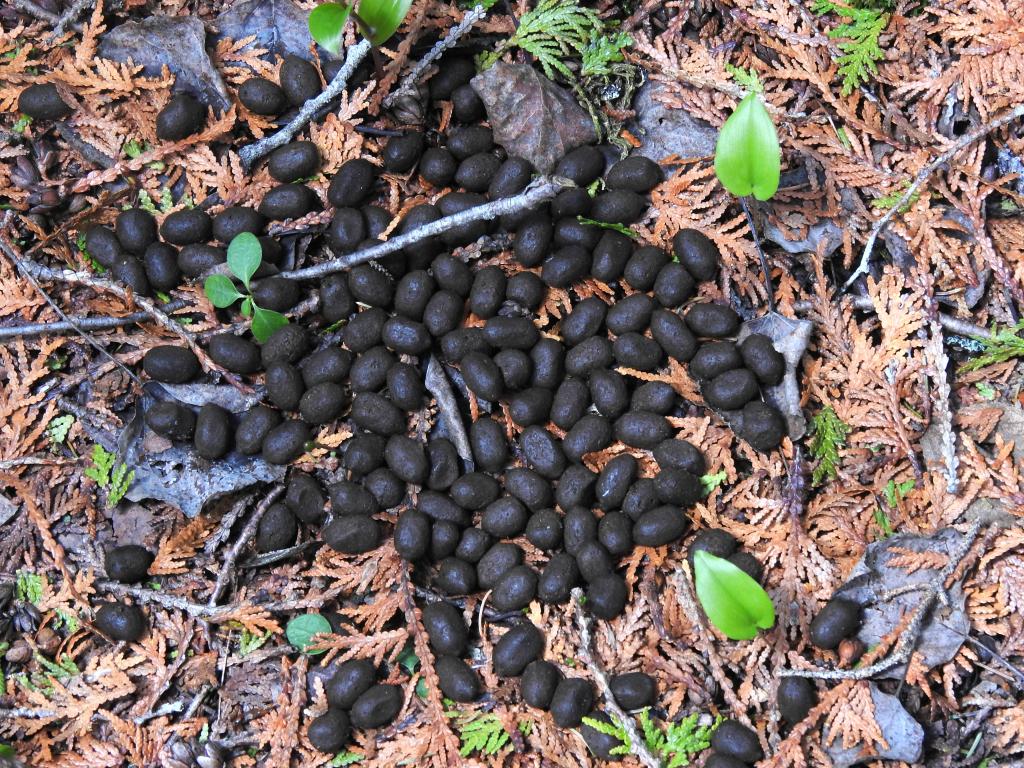
We then started finding piles of animal scat, which meant that there “should” be an animal around. Then we heard it. Claws on a tree. What was it?
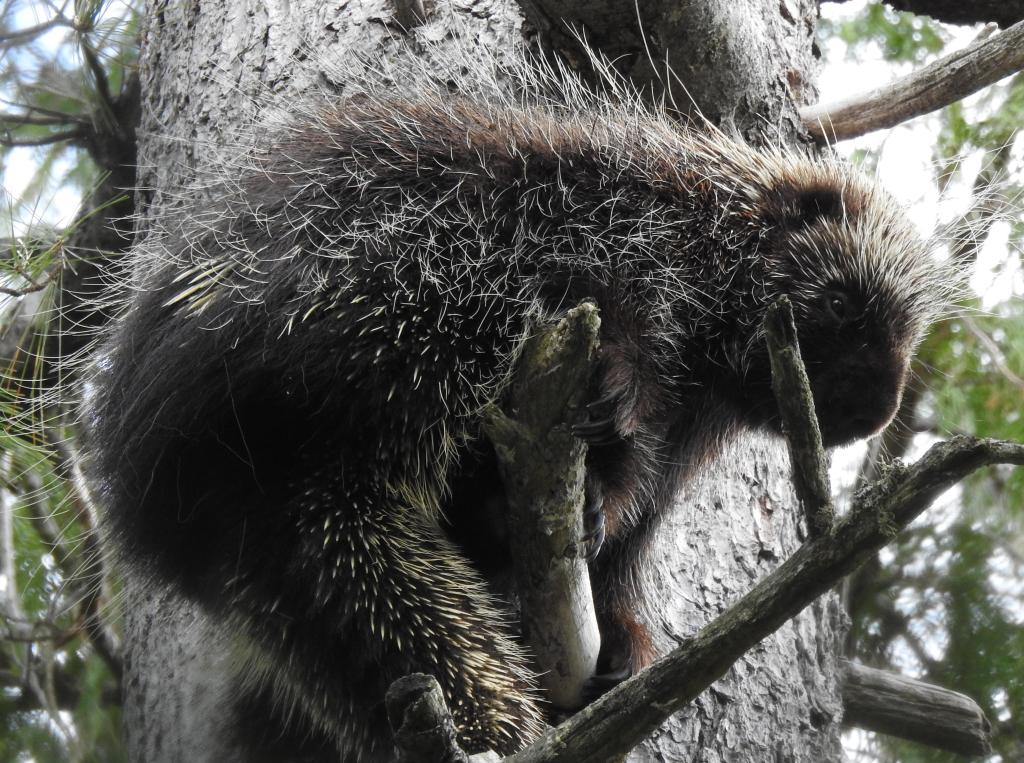
A big porcupine was up in a tree. Now we knew what was producing the scat.

We then found several Lesser rattlesnake-plantain plants, another orchid that won’t be flowering for some time. The larger plant here had a stalk with last years seeds.
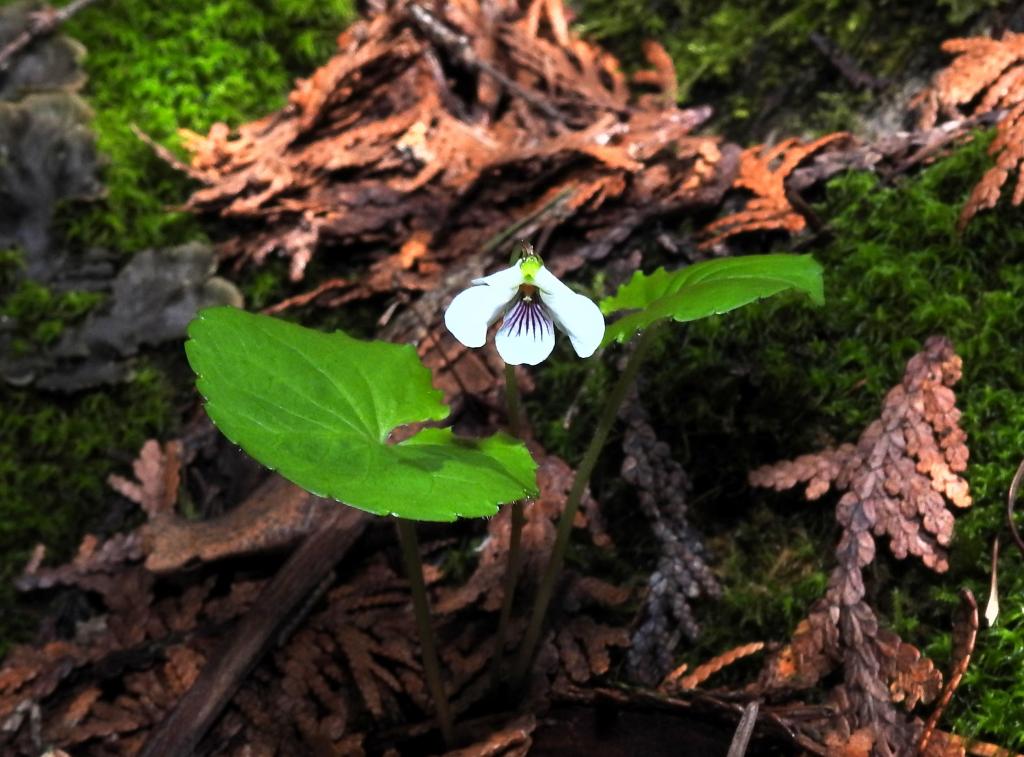
One of the violets we found, still awaiting identification.
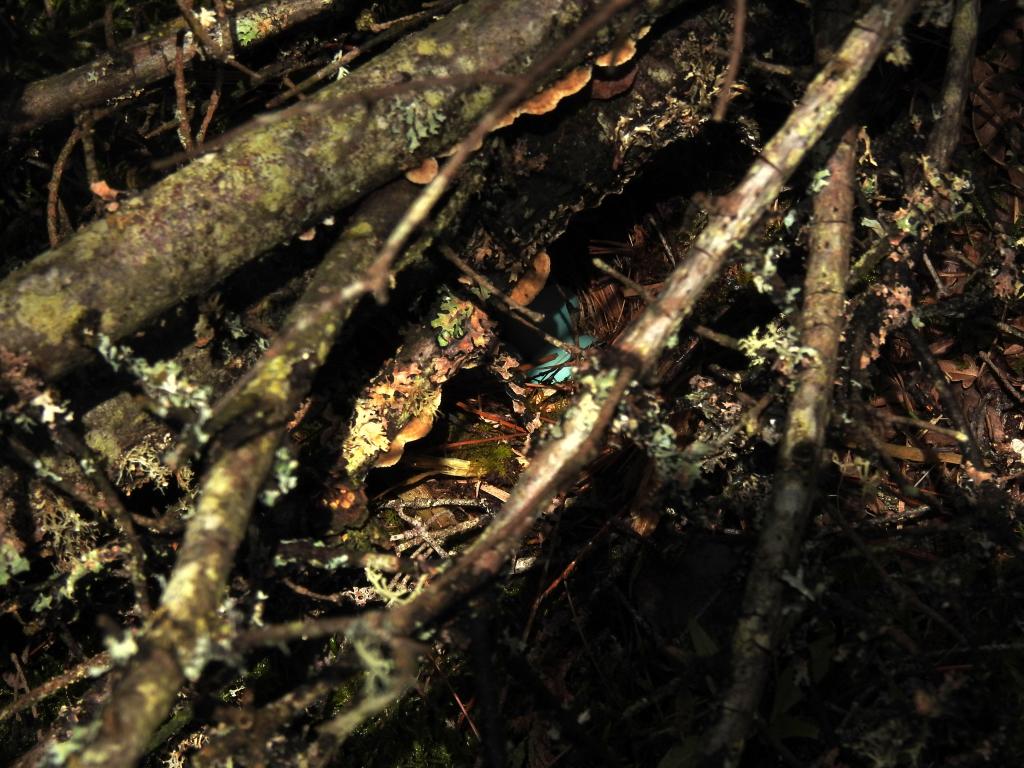
The blue-colored object in the center of this photo is a Veery egg. The nest was tucked under a log. The only way we found this was when an adult flushed as we approached. We quickly made our way past the nest on to other things.
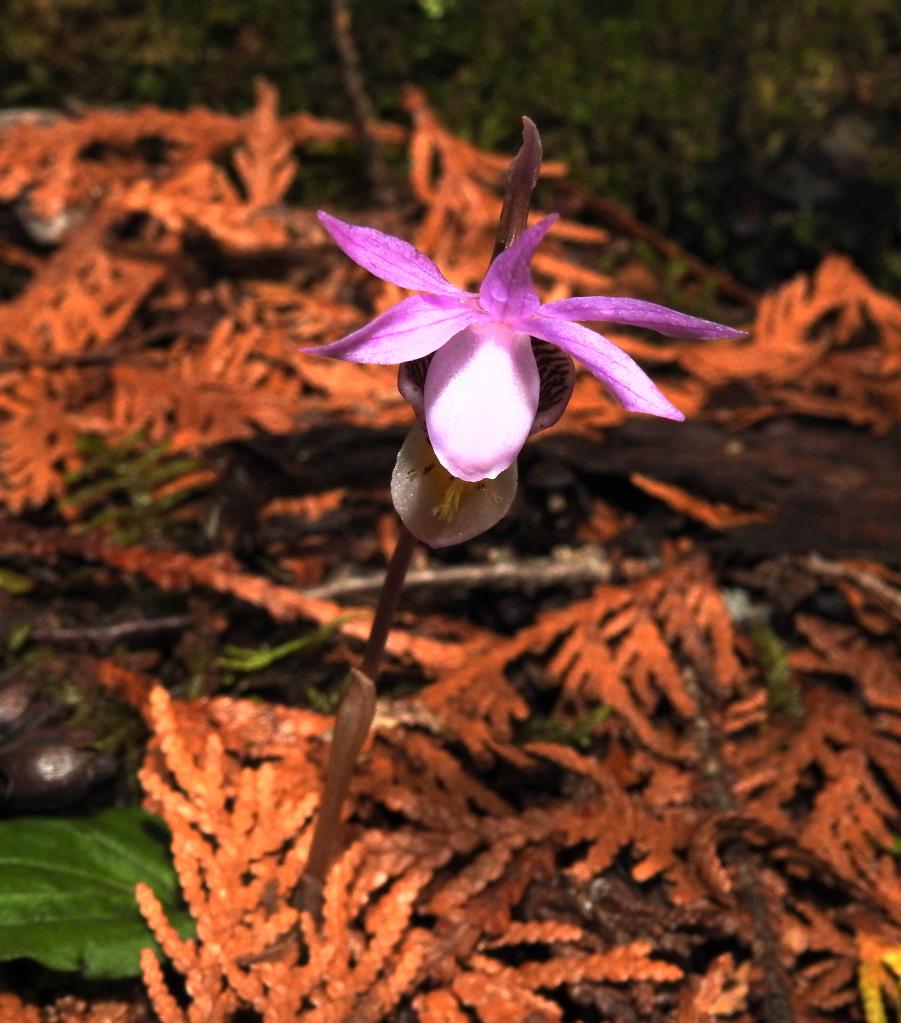
Then I spotted our first flowering orchid, and the reason we came here. This was our first Calypso bulbosa (Fairy slippers) of the day.
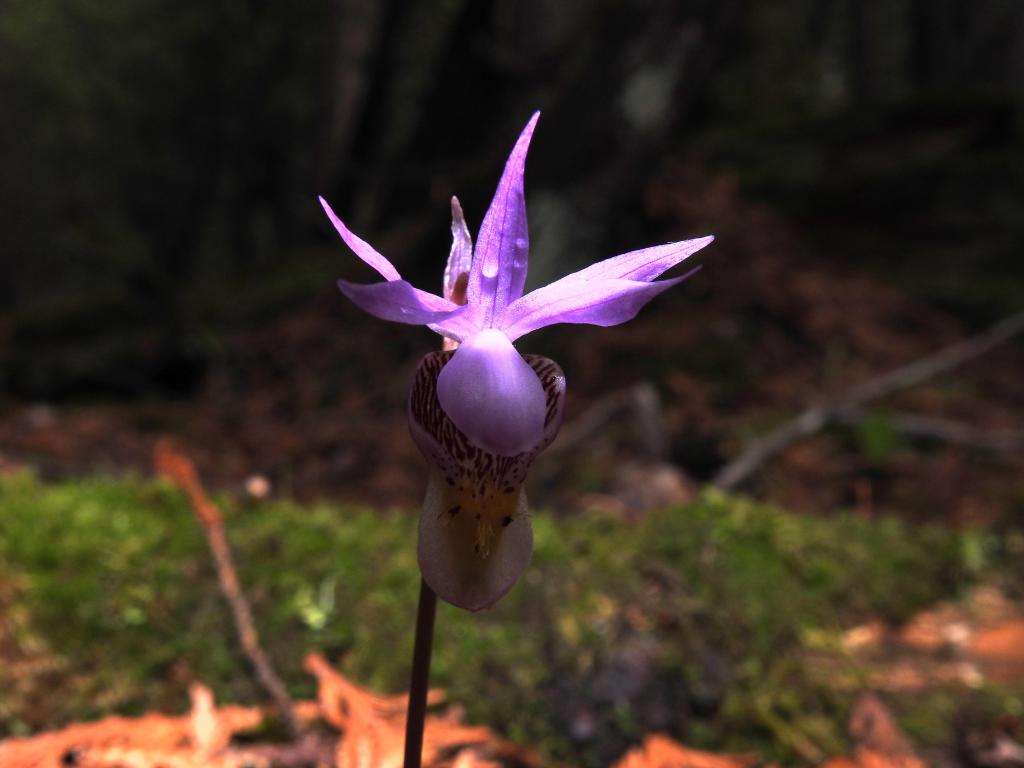
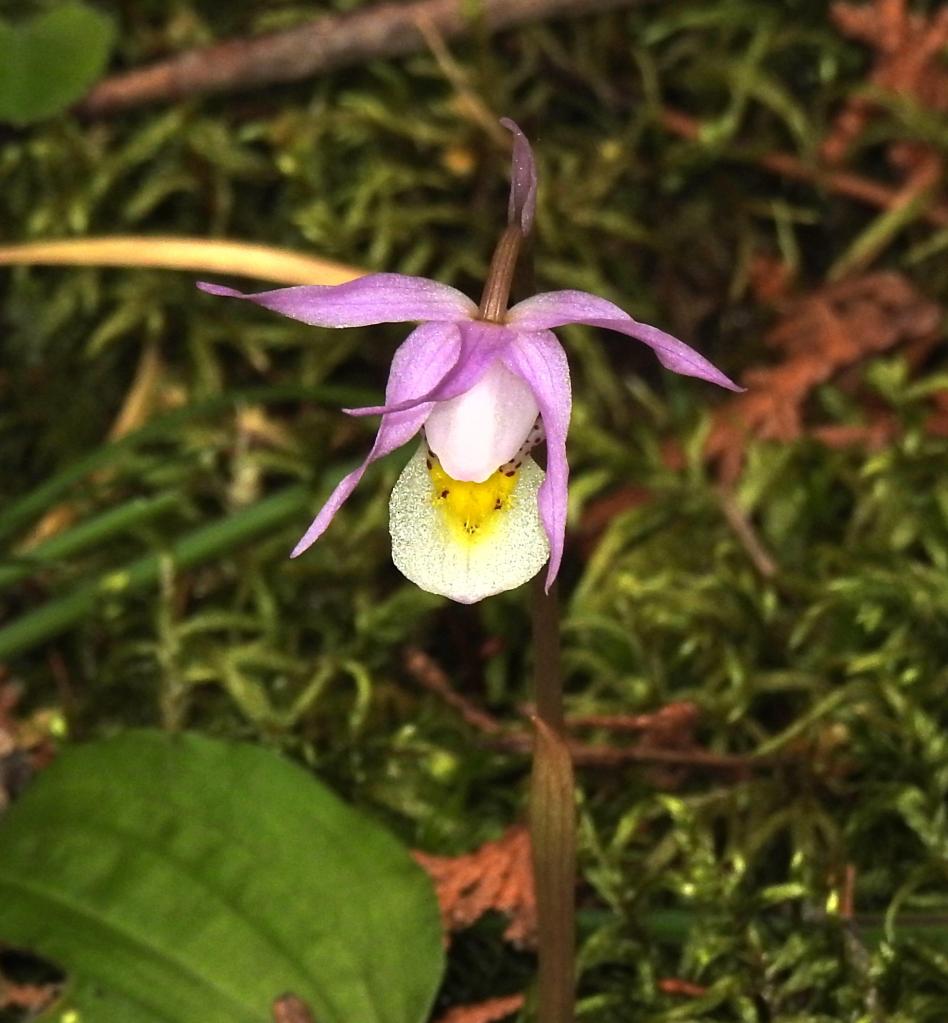
Close to two into our search we finally found them, by them I mean eight total plants.
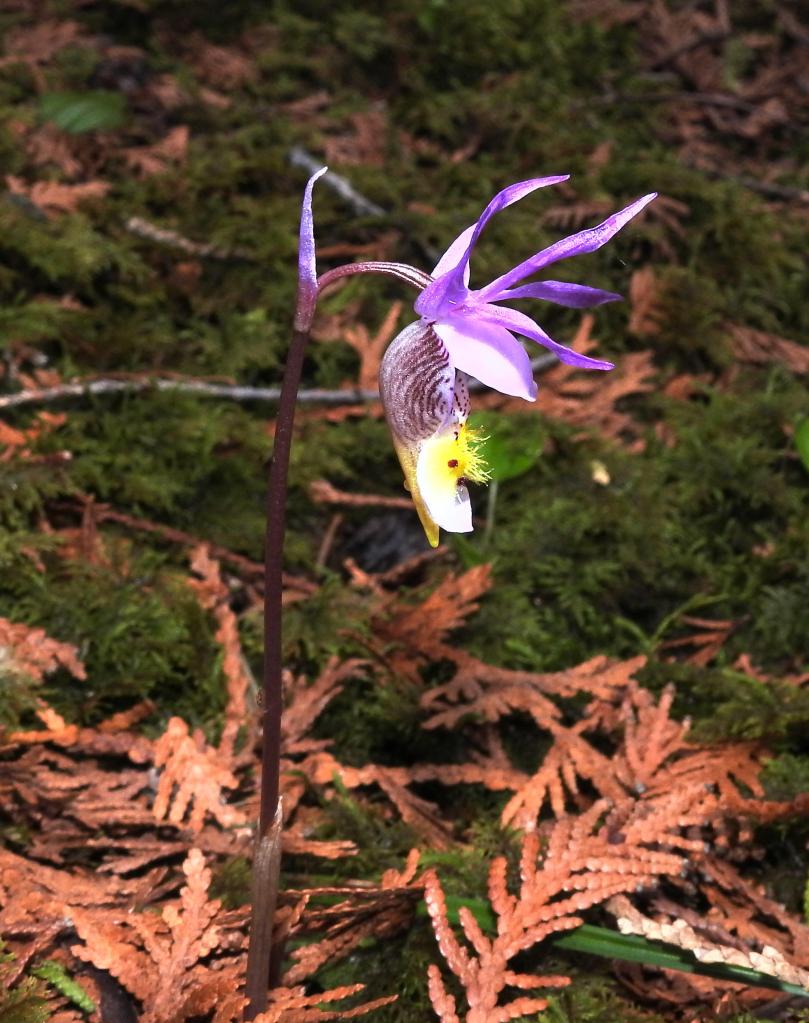
Each individual flower was at most 75mm (~3 inches) tall and surrounded by mosses and cedar leaves.
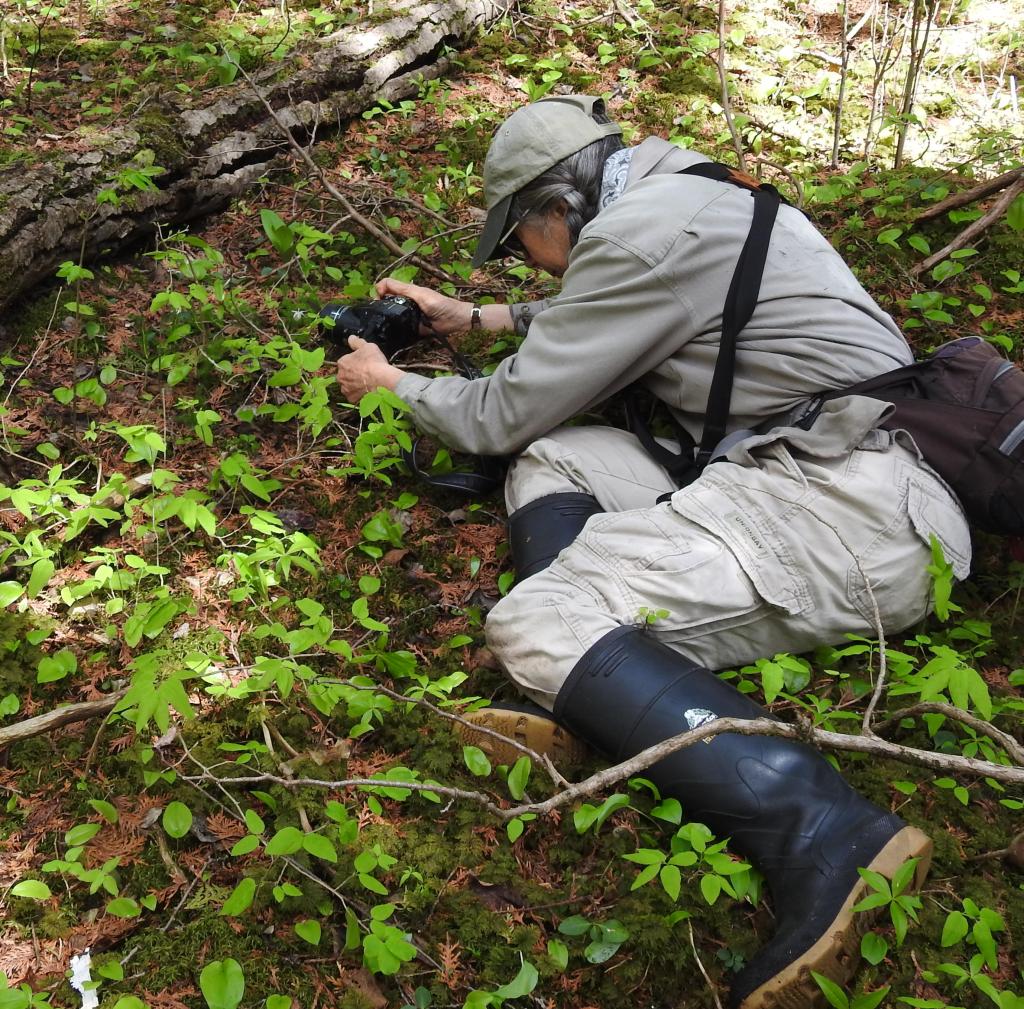
To give you an idea of the size, here’s Susan photographing a Calypso. The orchid is just in front of her camera.
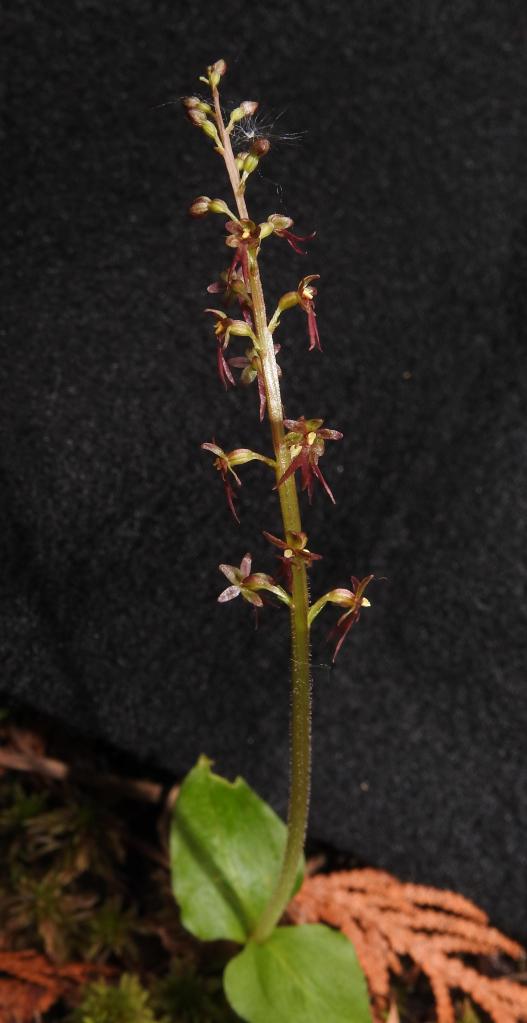
We then went on to another site after lunch to search for our second rare orchid of the day. This is the Heart-leaf twayblade. It was also flowering and was surrounded by Sphagnum mosses. Near this little orchid (slightly taller than the Calypso) is even more difficult to see than the Calypso. The individual flowers on the stalk is extremely small, perhaps 1mm at most.
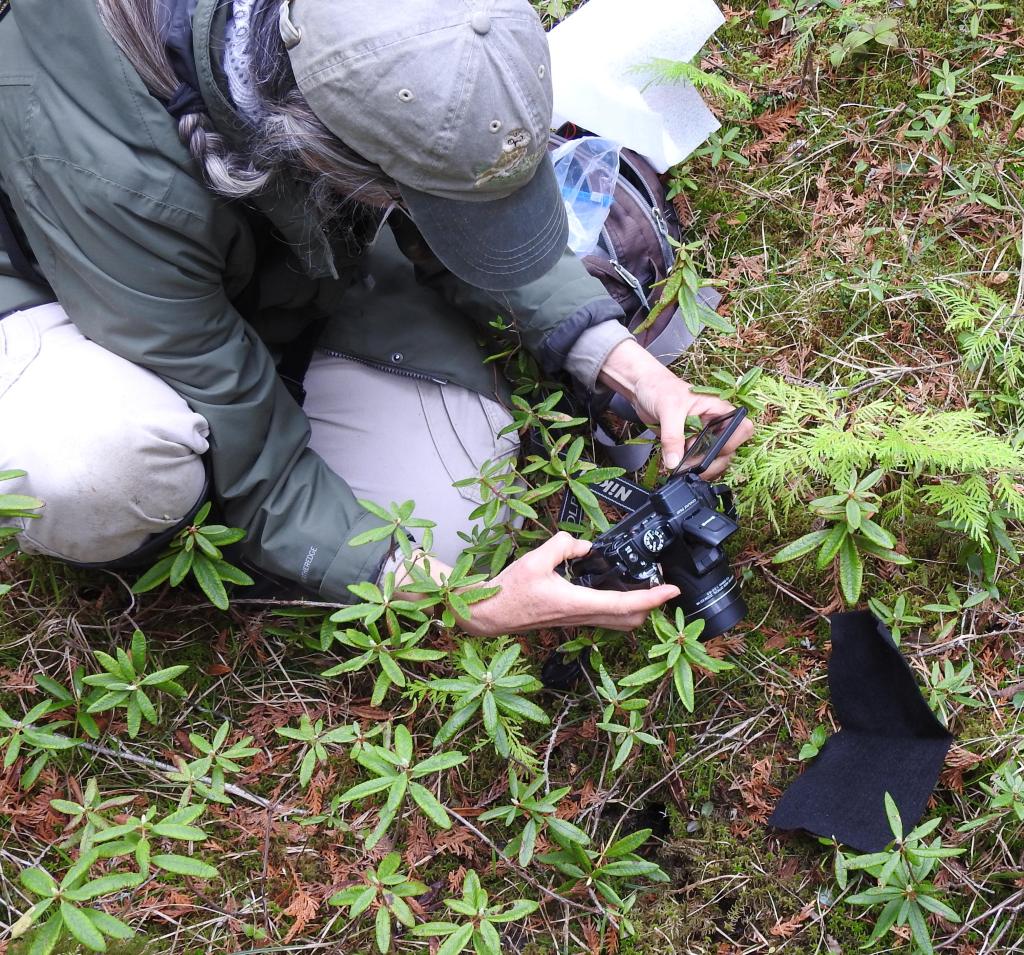
Here’s Susan photographing the twayblade with some black felt behind it.
So, in six hours we found our four targets, the easier to locate rattlesnake-plantains and the rare Calypso and twayblade.
More later…
 Michael's Place