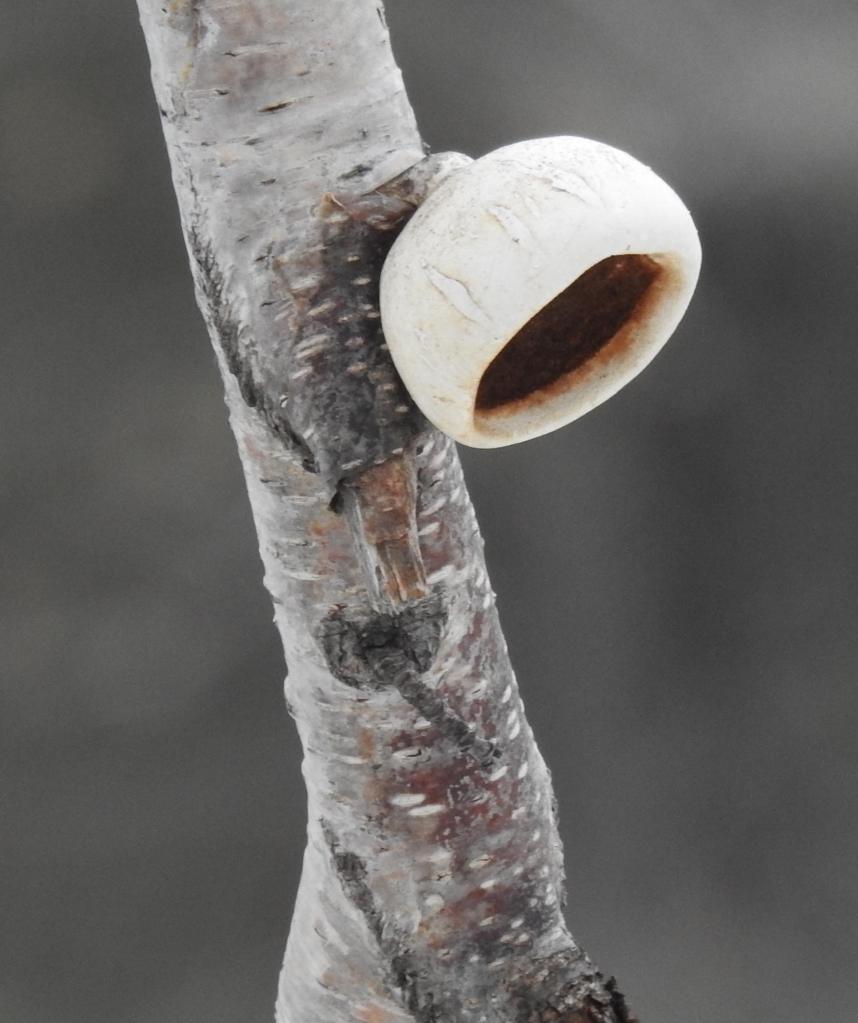
The trees here are a source of never-ending interest. This is a birch polypore which is a common fungus that grows on the white birch.
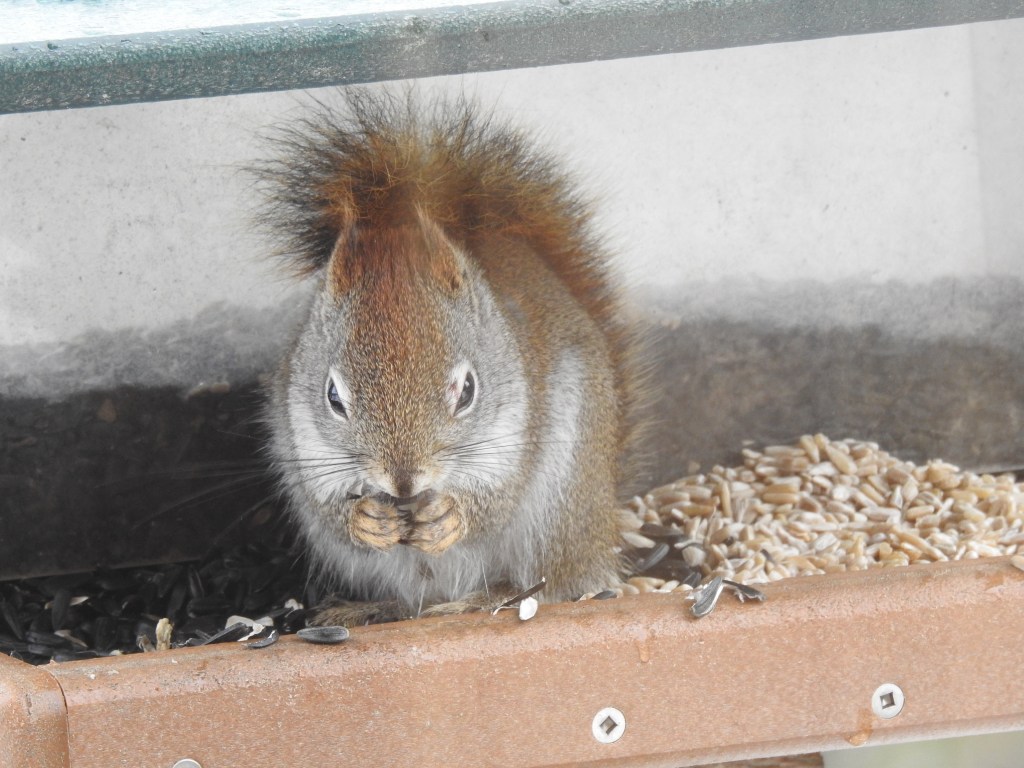

Our feeders many visitors beyond the common Blue Jays and Common Redpolls. Red squirrels seem to prefer the feeder on the deck, where they can feed while not standing in the snow. Once the snow is gone (another week or two, depending on the rain that is forecast) they will feed on the seed that is scattered below the feeders hanging from trees. The Red-breasted Nuthatches however are using all of the feeders.
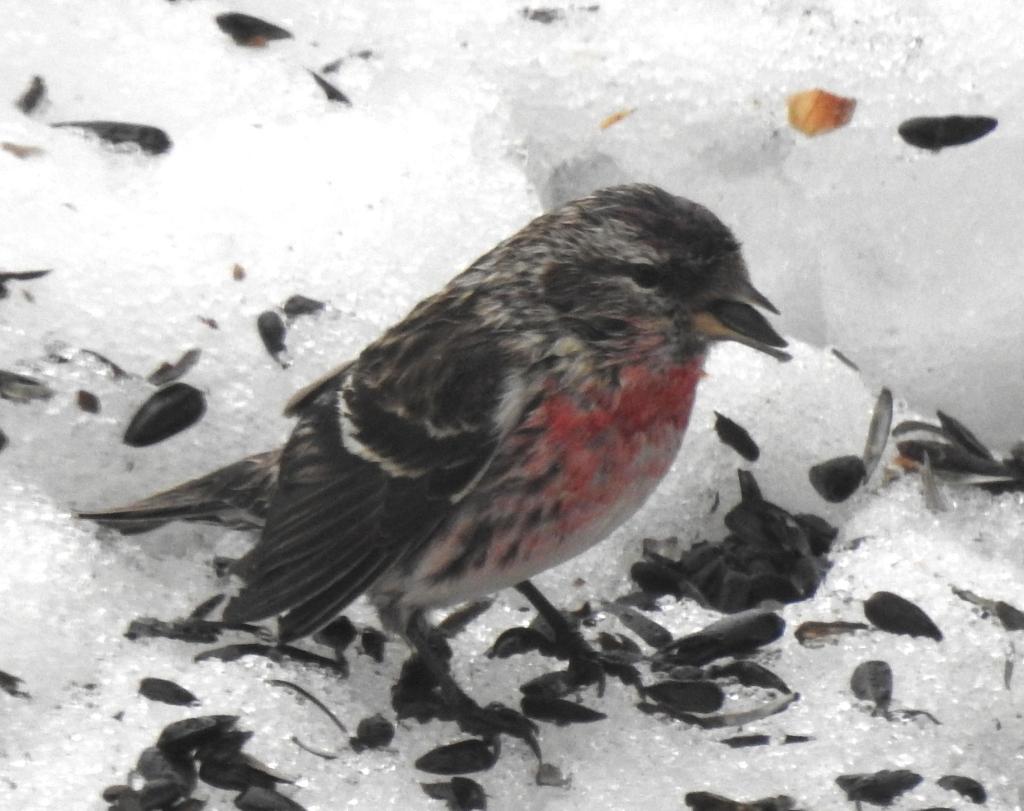
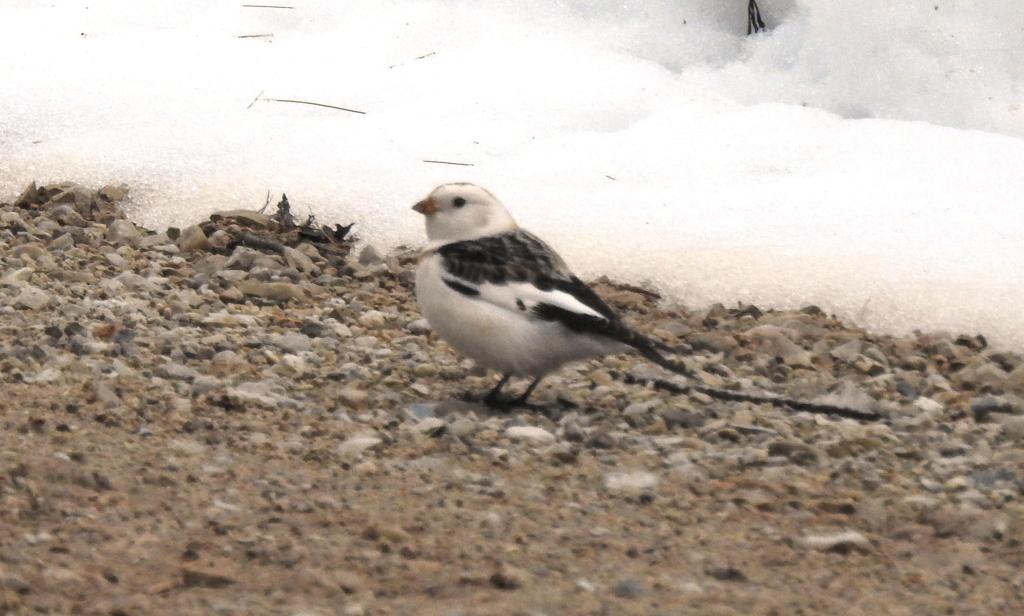
The redpolls and Snow Buntings have no problem with feeding on the ground. The redpolls will also use the deck feeder, deck, and other feeders.
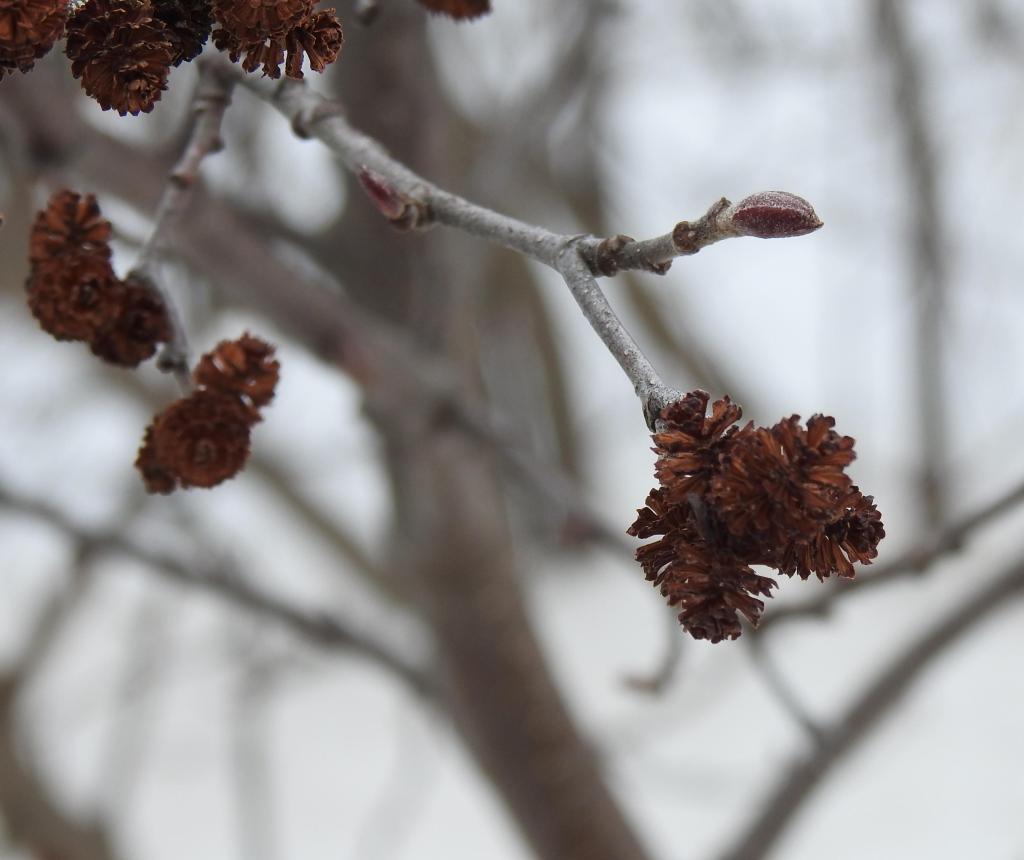
Walking to the Whitefish Point Bird Observatory allows us to have nice looks at Alnus rugosa, the speckled alder. These are the small cones on one.
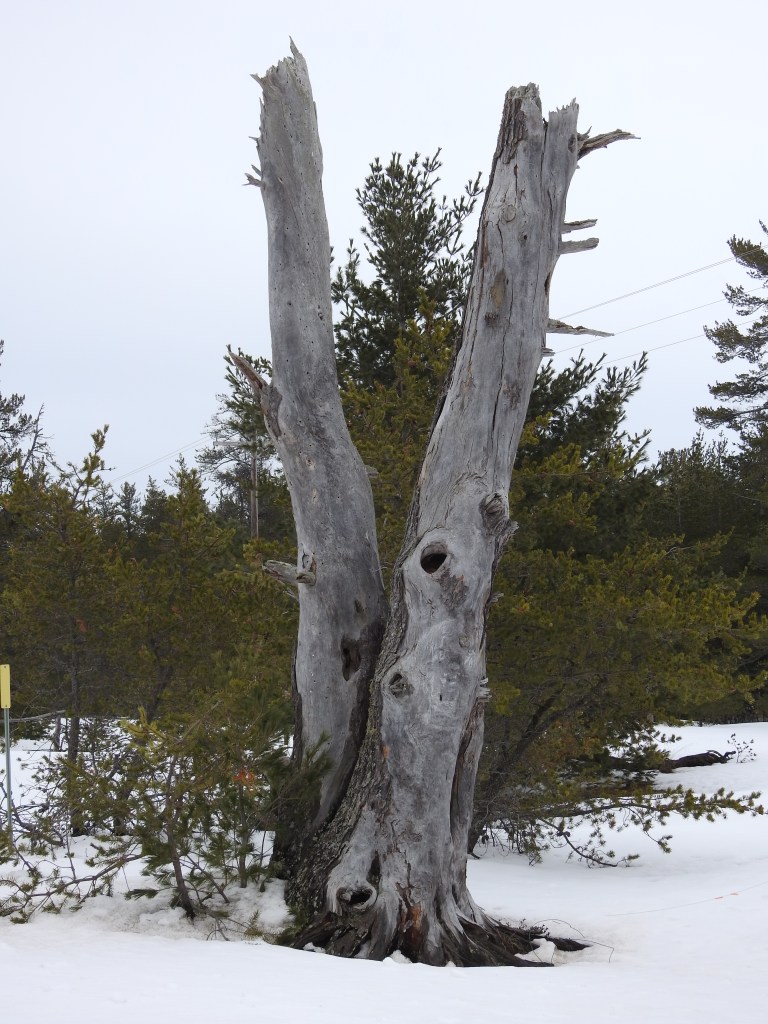
Yes, this is a dead tree. So what’s so special? Well, first it’s on our property – OK, we have lots of trees, dead and alive here. But for several years Red-breasted Mergansers nested in a hole on the other side of the tree.
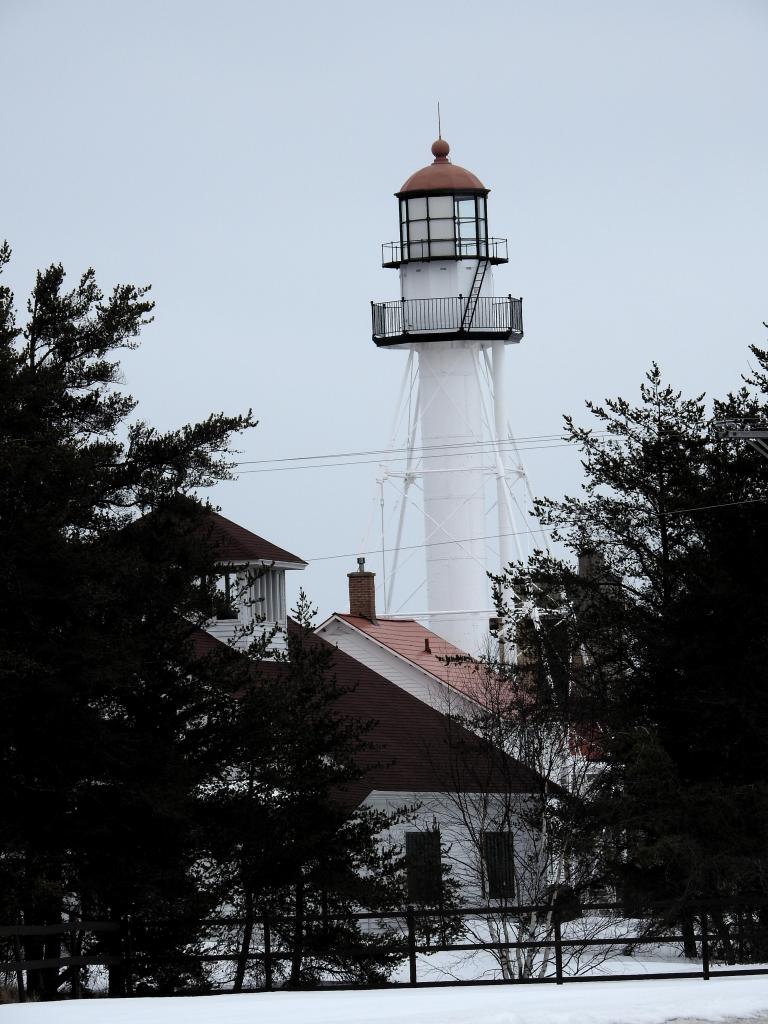
The half-mile walk down to the Point takes us to the lighthouse and Shipwreck Museum. I can remember the time when the fog horn sounded all night and the light was visible in all directions. Now that’s unusual, unless there is dense fog on the lake.
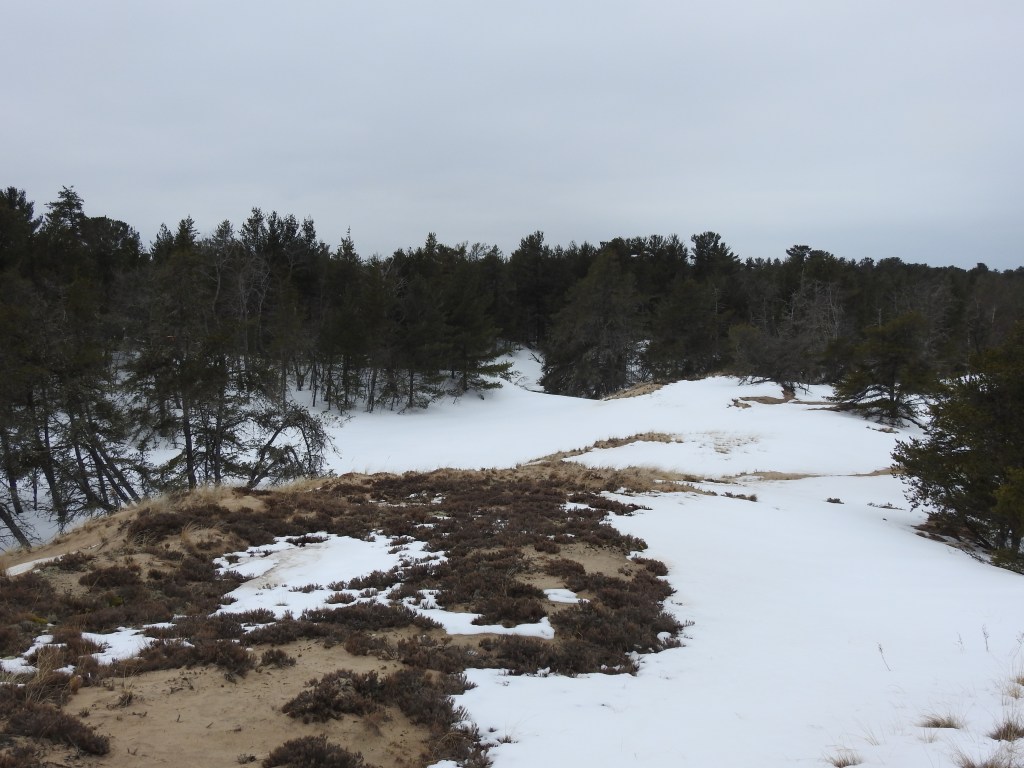
The walk from the museum up the stairs on the dune takes us to the hawk observation platform. There’s still plenty of snow on the swales between the dune ridges. There have not been many migrant raptors yet.
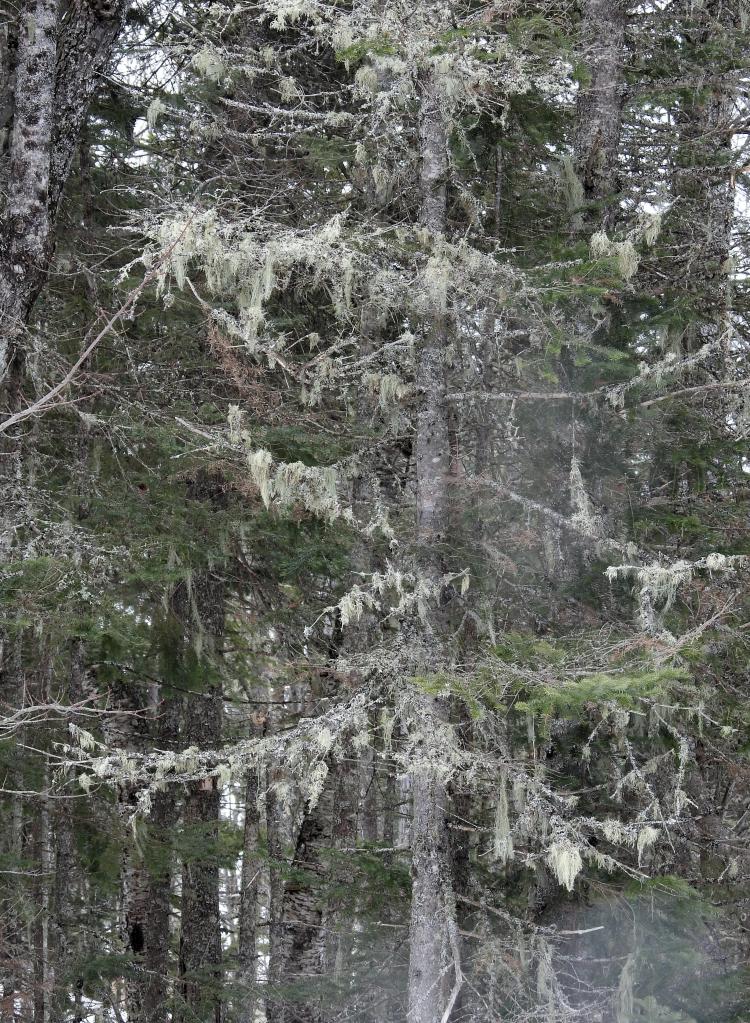
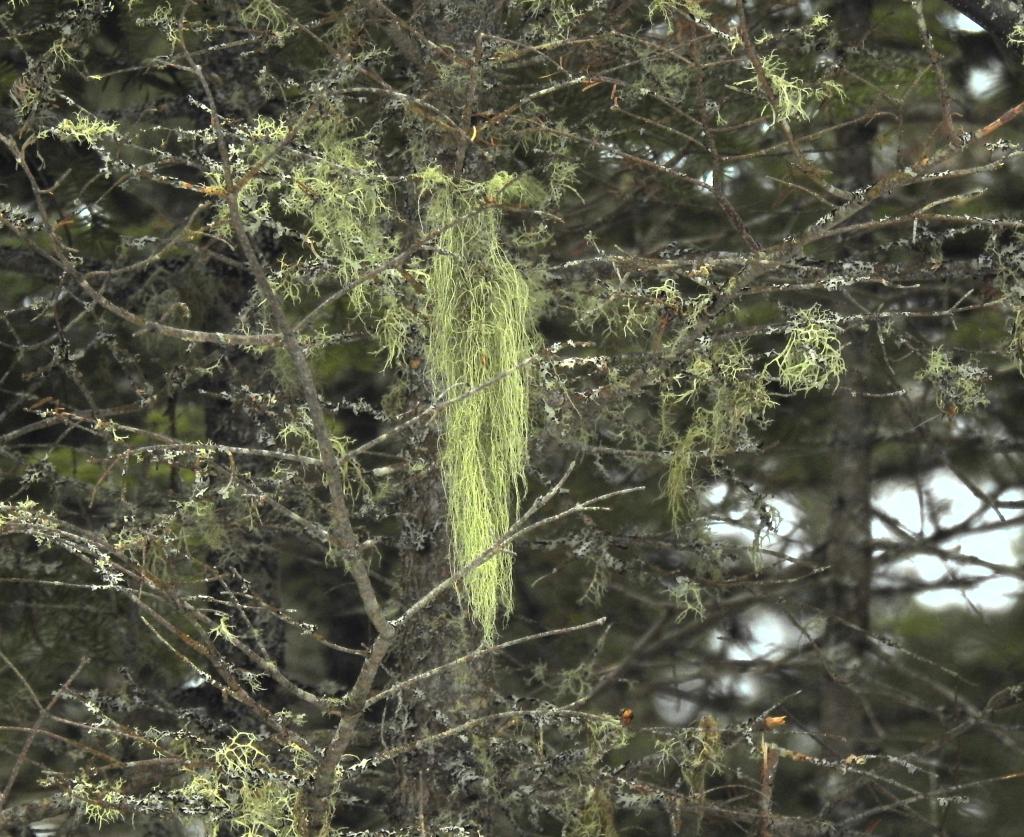
We took a walk south about a mile to a site where Northern Parulas nest. These beautiful warblers use Usnea lichens for nesting. Usnea cavernosa the grayish lichen on the left is common and regularly used for nesting. The longer green lichen is probably Usnea longissima, Methuselah’s beard. This is uncommon but also used by the birds. Once the Parulas are back we will check this site again.
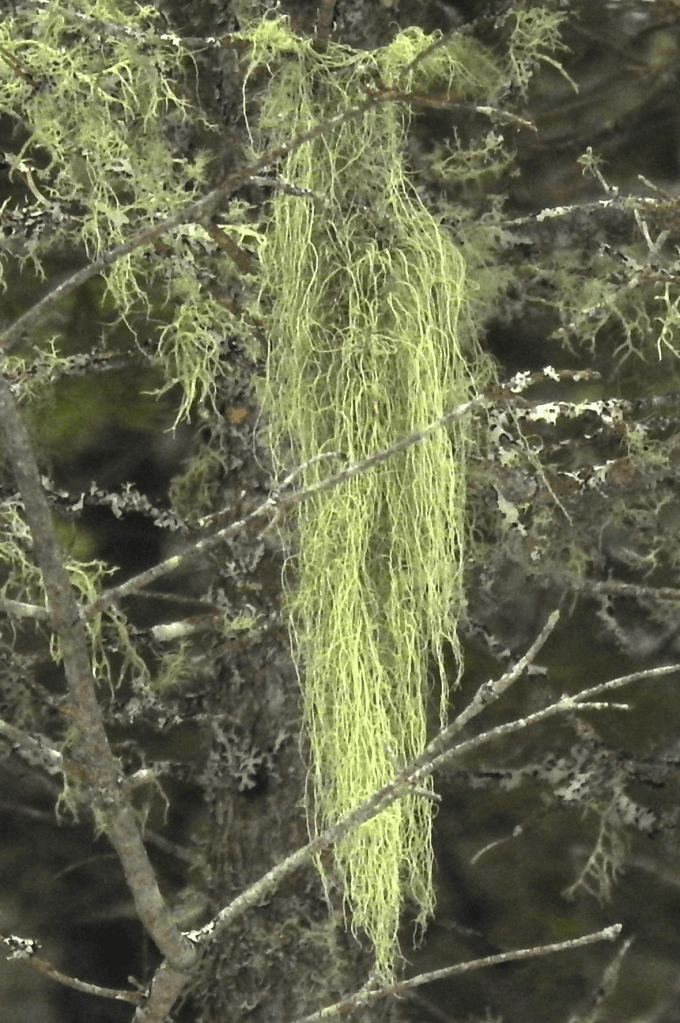
A closer view of Usnea longissima, just because it’s so nice.
More tomorrow…
 Michael's Place