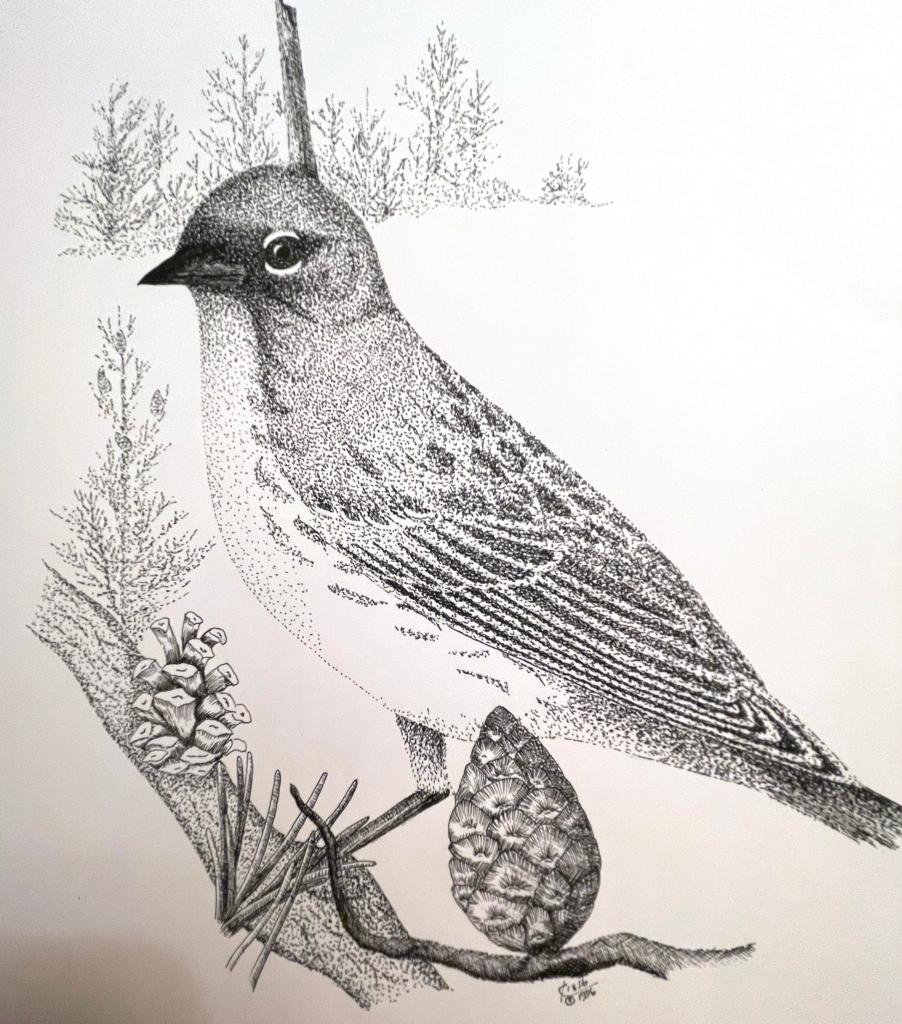
For the threatened art challenge I’ll be using some illustrations of animals threatened with extinction.
Kirtland’s Warbler nests mainly in Michigan with the heart of the breeding range in the Grayling and Mio areas. What threatens the warbler is the reduction in nesting habitat, extensive jack pines about 5-20 years old (5-20 feet high).
Over the years they have expanded their range into the Upper Peninsula where recently there were more singing males (67) this summer than ever recorded. We have seen them at Whitefish Point and nearby in Chippewa County on at least five occasions. In fact one year we had a singing male in western Wisconsin. During our spring camping trips to Pt. Pelee in Ontario we have had the fortune to see them at least twice. And finally one was in Furstenberg Park in Ann Arbor about 25 years ago. So, I guess we count as having been quite fortunate with a bird that has less than 3,000 breeding pairs.
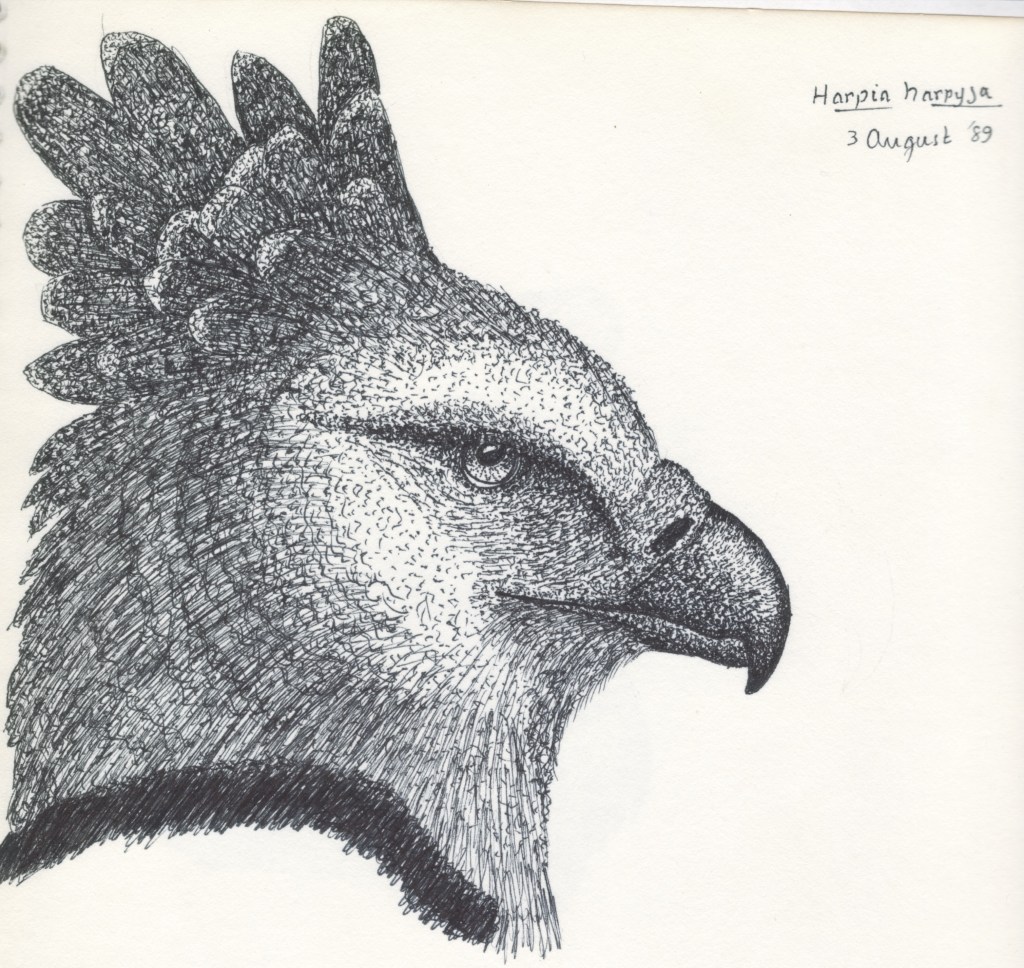
The Harpy Eagle was one of the birds that I most wanted to see in the world. In 2019 I was fortunate to travel to Panama with my friend Mike where we got to see one at nest. This large bird once an apex predator from southern Mexico to the Amazon in South America has been threatened with both habitat loss and illegal shooting.
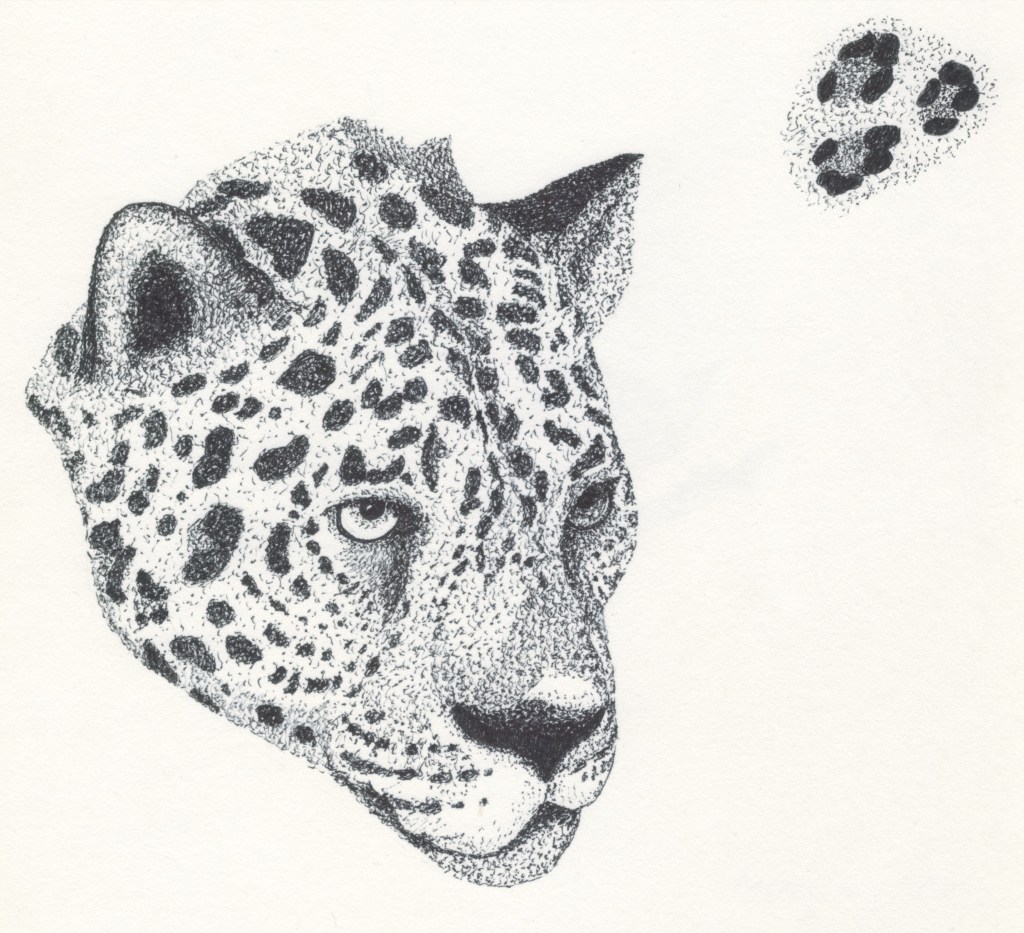
Another threatened animal is the jaguar. This large cat was once uncommon in Arizona and New Mexico down to South America. It too has been threatened by habitat loss and illegal hunting. The only wild once that I have experienced was a female “chuffing” in the dark rain forest near Palenque in central Chiapas, Mexico. Other than that I have seen a captive juvenile (also at Palenque), whose mother had been poached for her fur; and one in a zoo in Villahermosa, Veracruz who was a female making the same chuffing sounds as the one in Chiapas.
Seeing threatened animals, or plants for that matter can be both exciting and depressing. Others that I have seen (that I can remember) are the Bahamas Nuthatch, Cozumel Thrasher which are both possibly extinct. I managed to see two Spanish Imperial Eagle when their population was down to about 100 pairs, since that time the population has increased. Finally a tree that we made a special trip to see, the Florida torreya in the Appalachicola River drainage of the Florida Panhandle. When we saw them (perhaps a total of four) there were only 3-400 left. Unfortunately, hurricane Michael hit the heart of their range a few years ago slamming into their stronghold with 100 mph winds. Two years ago when we visited we could not find the easiest ones to see.
The art challenge for tomorrow in “underground” which will prove to be a challenge.
More then…
 Michael's Place