
The above photo is neither great nor definitive without a lot of experience. It is, however a photo of four Long-eared Owl that were migrating at Whitefish Point. It was in the 1970s when I first started going to Whitefish Point. That was before the formation of the Whitefish Point Bird Observatory (I was a Board member years ago). But, I started going there because it was a place that with some luck and effort you could watch owls migrate on spring evenings. Since then I have been lucky enough to see thousands of owls.
I have “chased” owls everywhere I have traveled. Owls are special, they are both silent and yet vocal. I have seen owls from Canada to Panama in the New World as well as in Spain.
At one time I would spend hours drawing and illustrating owls.
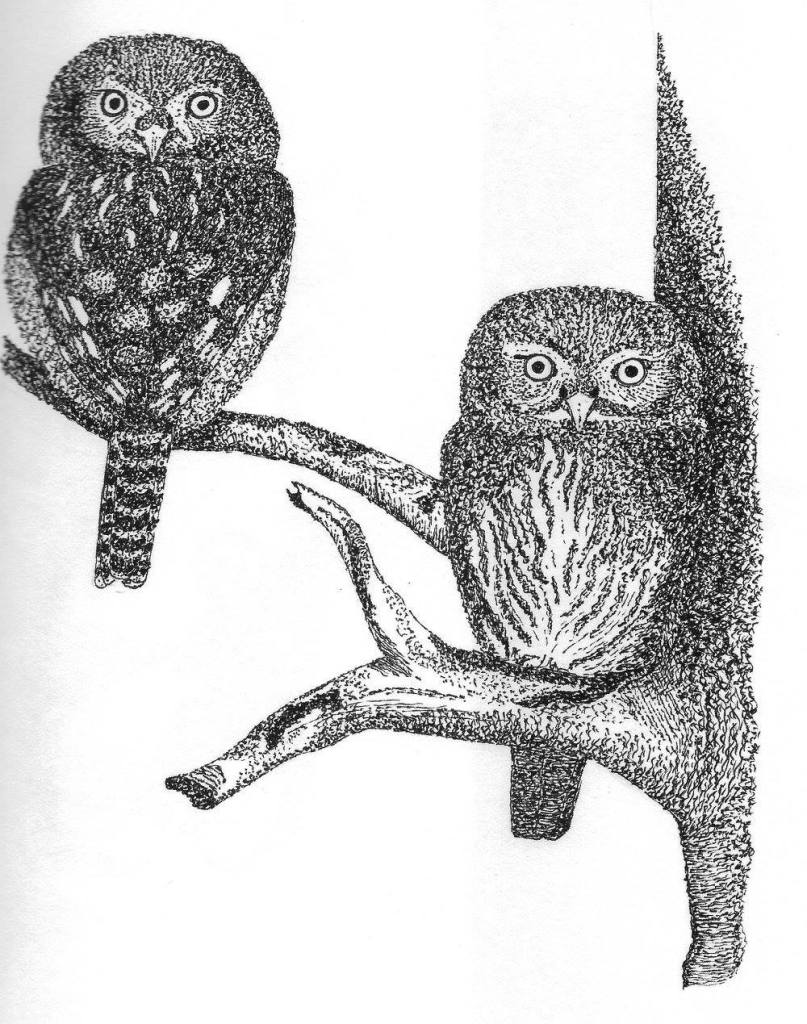
Here are two Ferruginous Pygmy Owls, showing both the front and back. These “cute” looking owls were illustrated from two different photos that I took in the Yucatan. And yes, they can rotate their hear “almost” 180 degrees allowing them to see directly behind them.
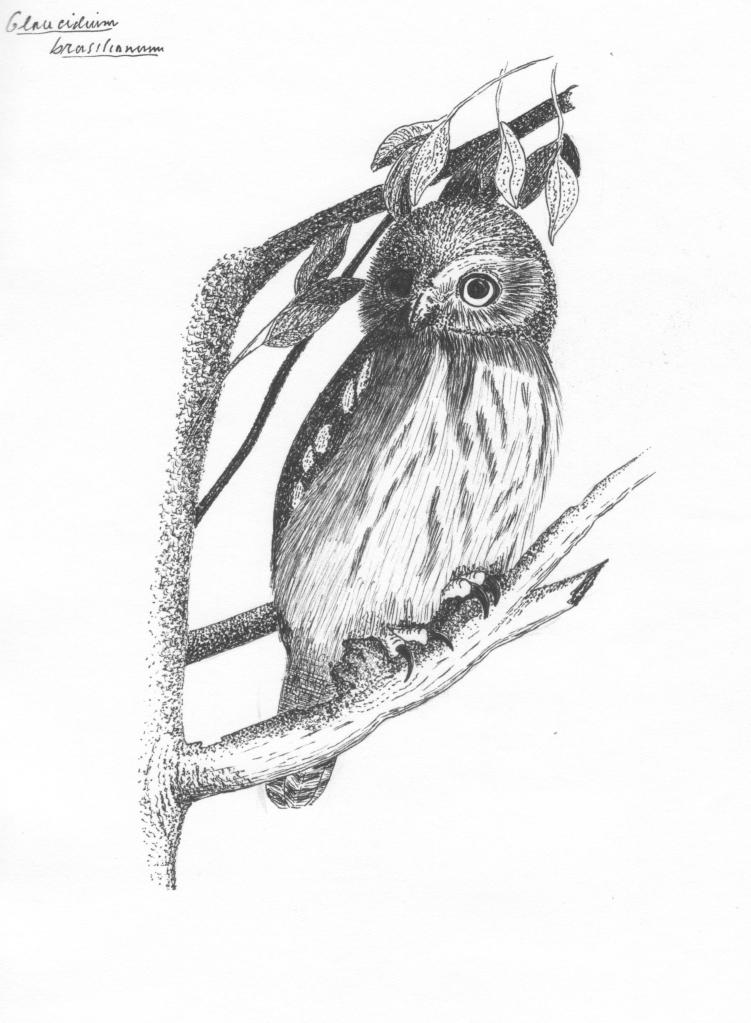
Another illustration of a Ferruginous Pygmy Owl. These small owls are about the size of a soda can.
The Great Gray Owl is at the other size extreme.
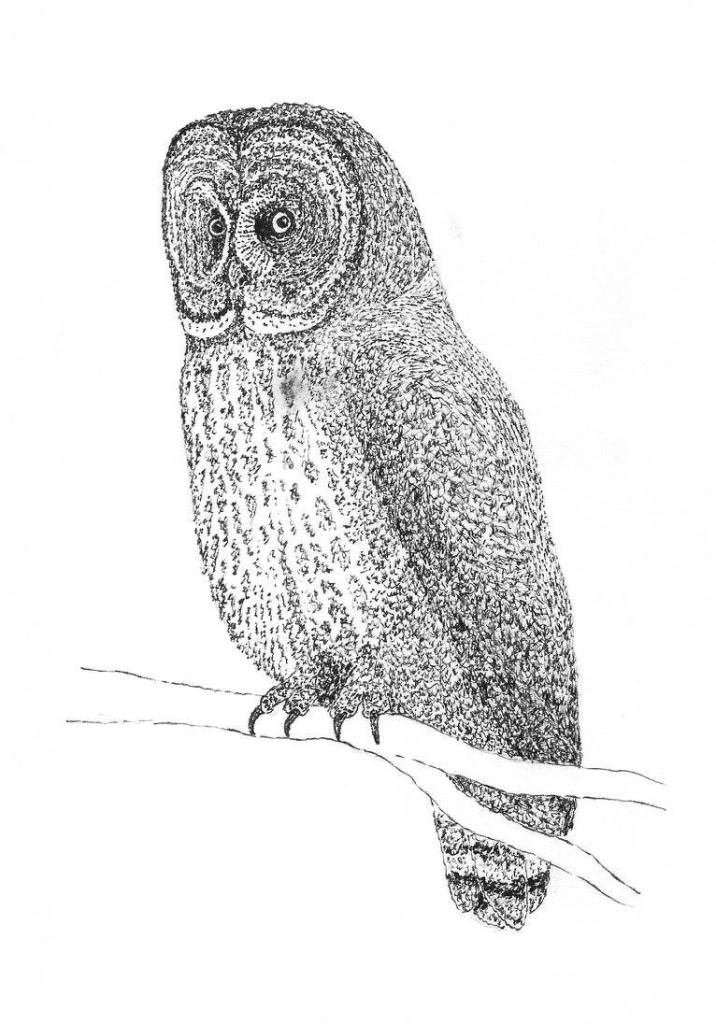
The above illustration was done from a photo that I took in Chippewa County, Michigan. These large owls are rare visitors to the northern Great Lakes states, moving south from Canada in some winters. We were fortunate to experience the last major irruption into Michigan in the 1990s when 100s were in the eastern Upper Peninsula.
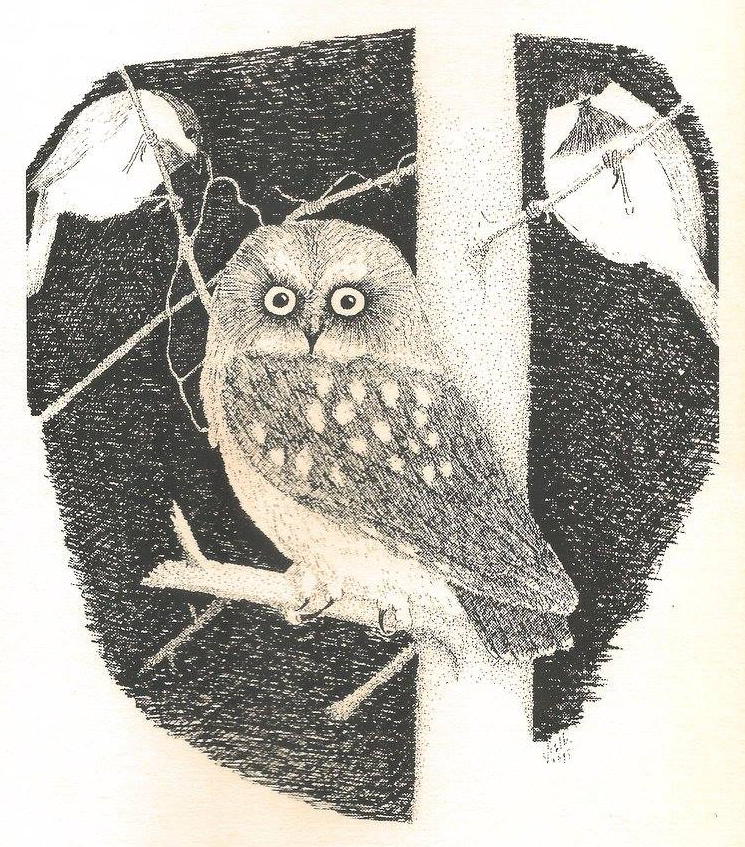
A common migrant at Whitefish Point is the Saw-whet Owl. These little owls, approximately the same size as the above pygmy-owl can be found sometimes during the day. Usually we find them quietly tucked into a jack pine. The one above was photographed in Ann Arbor. Susan found it when she followed the mobbing calls of a group of chickadees.
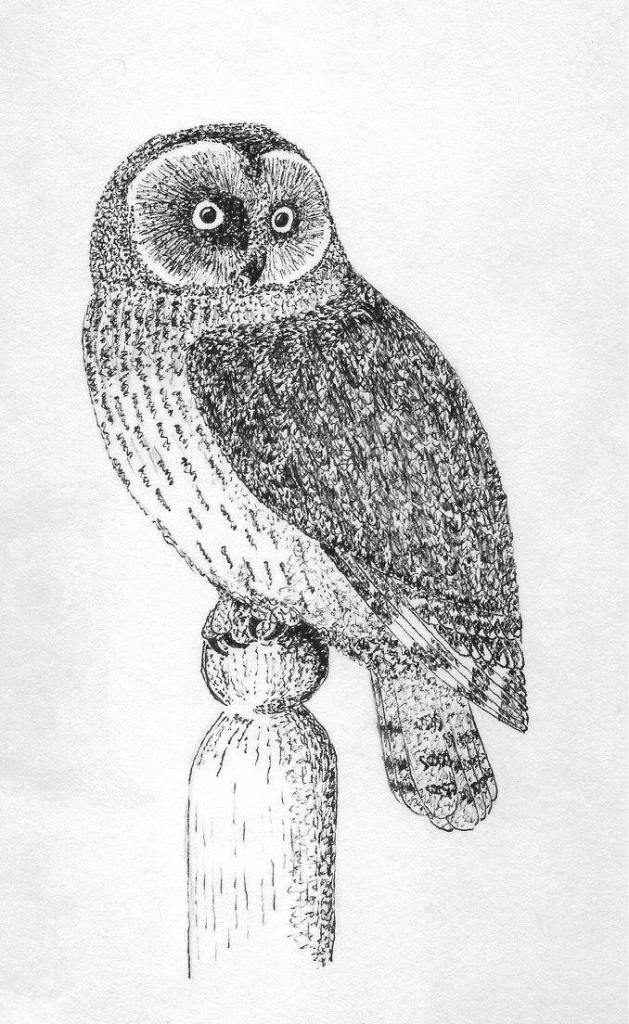
An owl that many bird-watchers are familiar with is the Short-eared Owl. These owls can sometimes be seen at dusk or dawn hunting fallow corn or wheat fields. Usually, when found there are small groups. These groups will often spent the winter together.
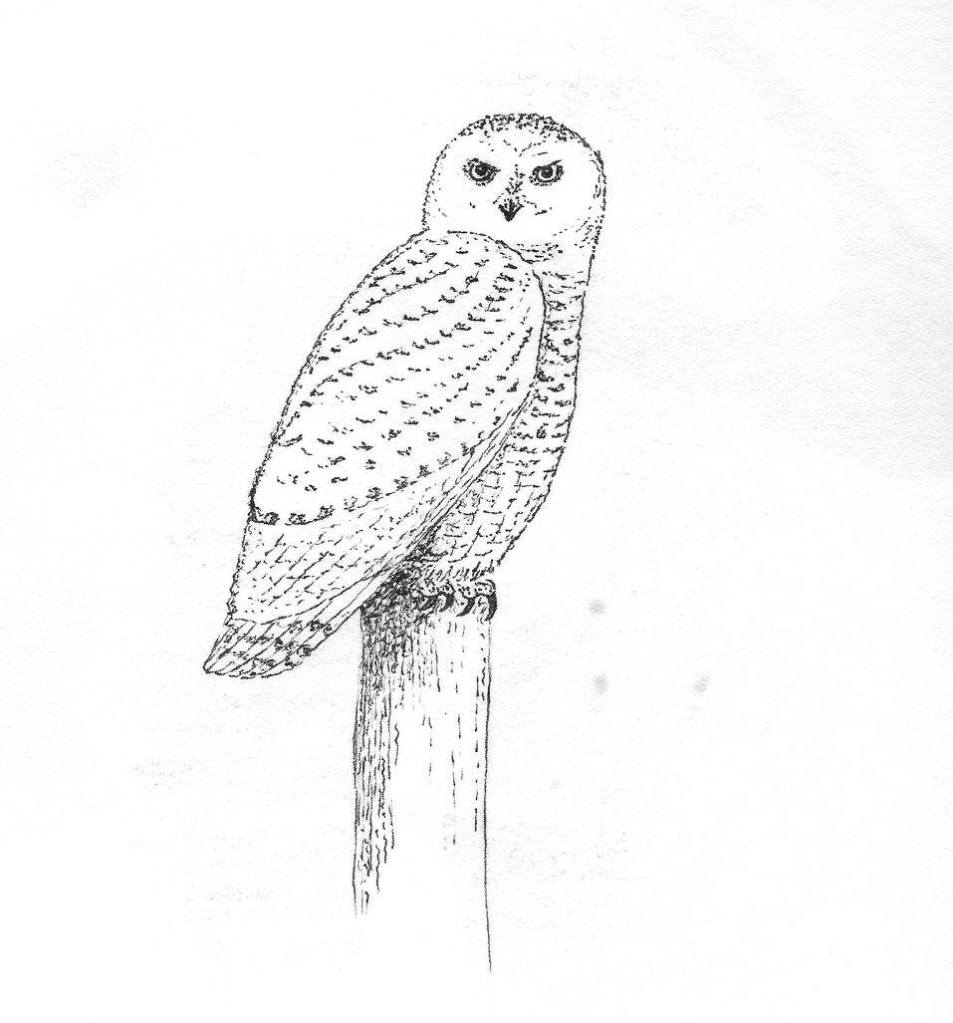
The final owl for today is a Snowy Owl. We are fortunate in Michigan to typically have a few to many of these large owls here in the winter.I have been fortunate to see them throughout Michigan, southern Ontario and in northern Ohio.
Tomorrow the art challenge is “spiny.”
More then…
 Michael's Place