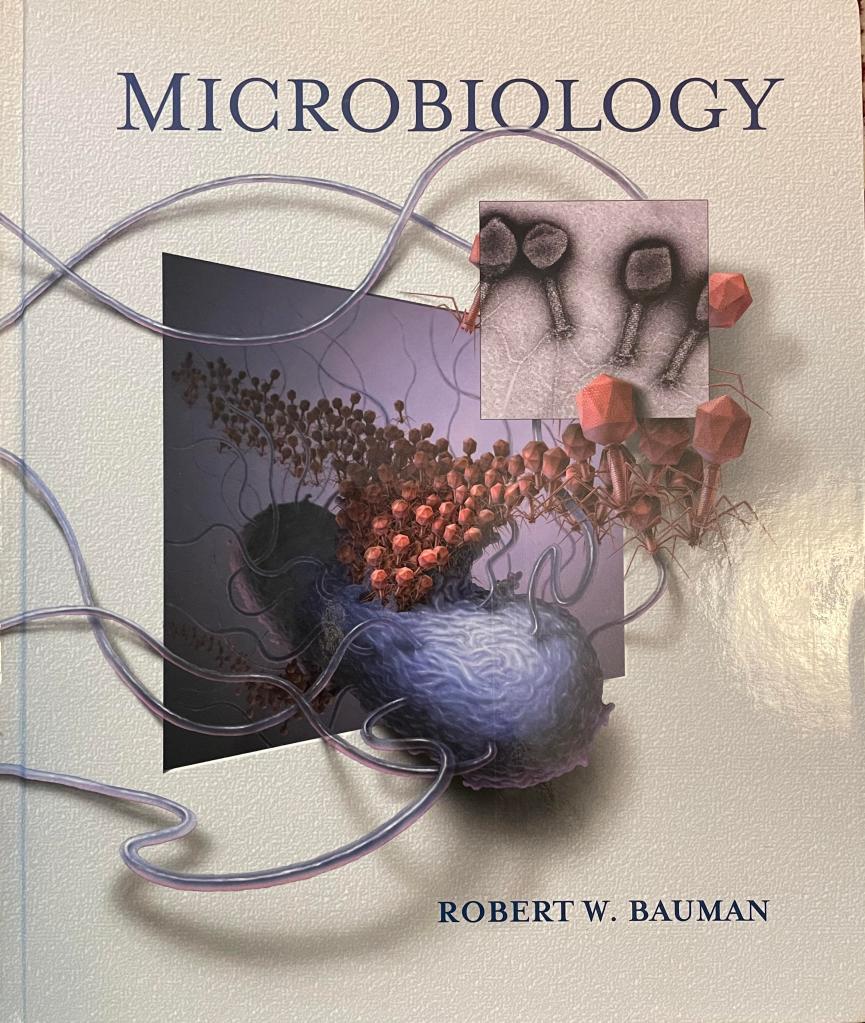
The other morning I was disturbed by a story I was listening to on NPR. A person discussing the current SARS-CoV-2 pandemic (Covid-19) stated that the virus mutated in order to continue to evade antibodies and infect other people. Obviously, the person had no training in medicine, microbiology or physiology.
Viruses, like anything that contains RNA or DNA undergoes genetic re-arrangement or “mutation” when reproducing. Every day the typical human makes numerous little genetic mistakes that are dealt with by our own antibodies. Sometimes this mistakes slip past our immune defenses and cause disease, mostly cancers. With viruses they cannot reproduce, conduct any metabolic process or mutate unless they have already infected a cell. They want nothing. As the infection rate within a population drops, the number of viral particles drop, thus decreasing the number of new strains. Ultimately, over time, the virus will disappear.
I wish that media outlets had a disease correspondent that might have more knowledge that a journalist, who is a good story teller, trying to seel stories.
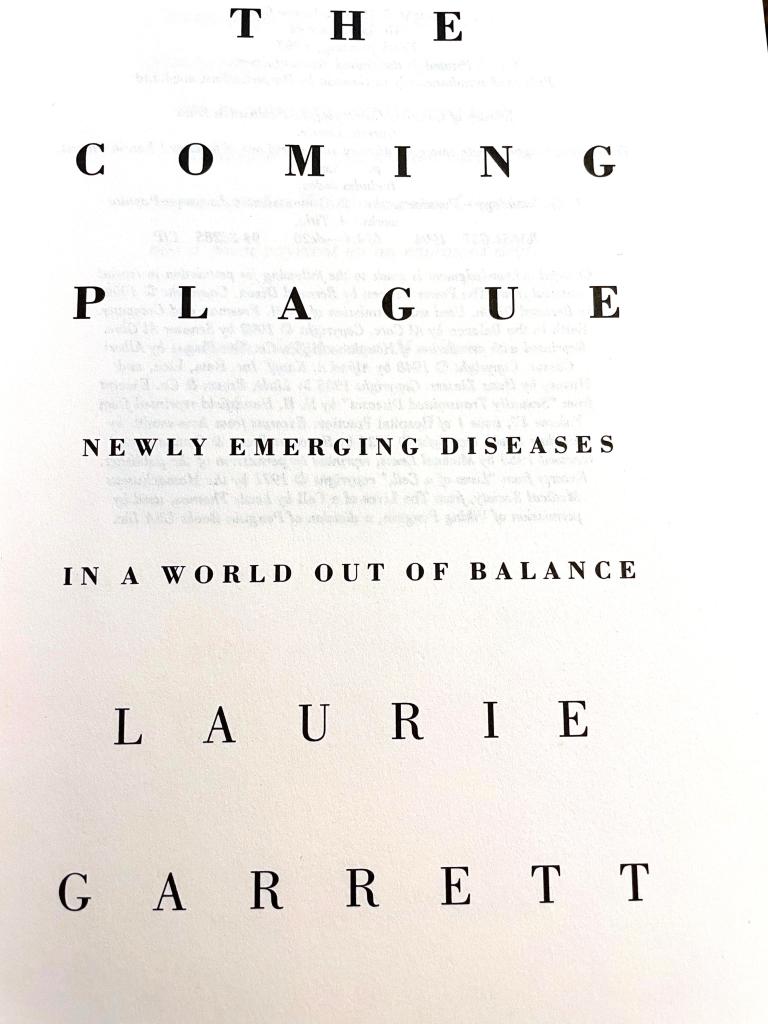
Back in the 1980s, Laurie Garrett was a science journalist for NPR when GRID (Gay Related Immuno Deficiency) which ultimately became known as HIV/AIDS . Her reporting was factual and chilling with little editorial comment. Later, in 1995 she wrote The Coming Plague with over 700 pages covering “newly emerging diseases.” It didn’t take long for me to read the entire book, several times leaving lots of notes on critical points (I am sure that people other than me take marginal notes in books, anything that I have that is important to me has marginalia scribbled here and there). Since we are now at the point where SARS-CoV-2 is the plague we need another volume like this, not inaccurate and misleading, but with the latest and most comprehensive data.
So, what are viruses? How do scientists organize them? What diseases are caused by them?
Viruses are acellular particles and obligate intracellular parasites. They have no cellular structures and are incapable of any metabolism, therefore cannot grow, respond to the environment or reproduce without parasitizing (infecting) an appropriate cell. Therefore, they are neither alive, nor are they capable of dying. Rather, they are either active or inactive. When they infect a cell, their RNA or DNA will then become active, utilizing the cells structures to make new viral copies, sometimes with mistakes (mutations). If they do not land on an appropriate cell they will continue to exist until over time the chemicals that they are composed of fall apart.
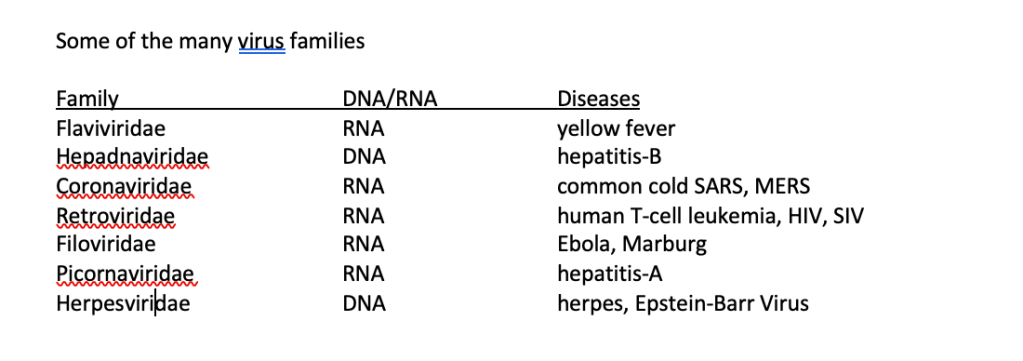
How do scientists organize them and what diseases do they cause is rather complex, considering the tremendous number of viruses that exist. The table below gives some examples that are important to humans.
I had a request for some bread and canning recipes which will appear in the next few days. Until then, that’s all…
 Michael's Place