
In the late spring, all summer and into fall we spend a lot of time in our garden. As a result of the time we spend there we get a lot of vegetables and encounter many interesting insects.
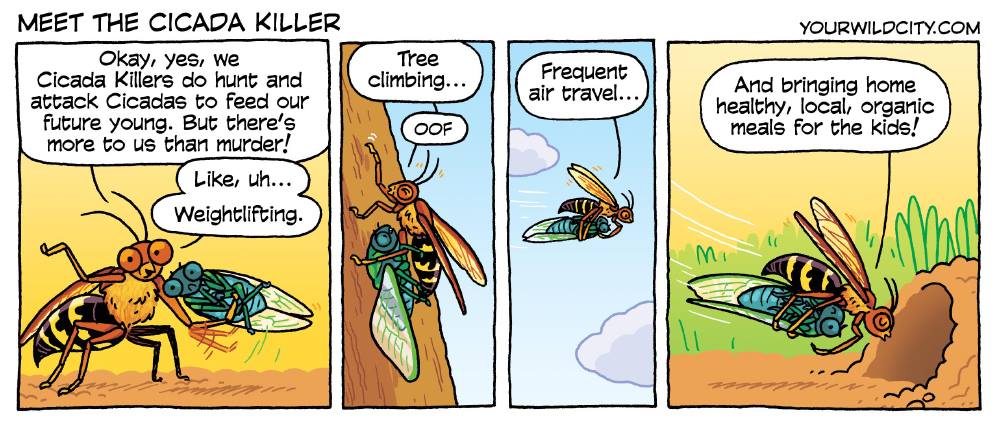
The cicada killer ( a large wasp that nests in our yard, usually along the edge of our drive) can be seen catching and paralyzing cicadas, which are common street tree insects all around us. The cicada is then taken to the nest where the female wasp will lay an egg on the cicada before enclosing with dirt. The cicada will become a living food source for the developing larva. Most of the cicadas taken are dog-day cicadas (there are several species).
A funny cartoon appeared on Face Book last year that was about the cicada killer.
Since we grow a variety of vegetables in the garden we are used to dealing with plant pests. One that we dislike as a caterpillar, but like as an adult is the Tobacco (or Tomato) Hornworm. As a caterpillar it eats both tomato leaves or tobacco leaves.
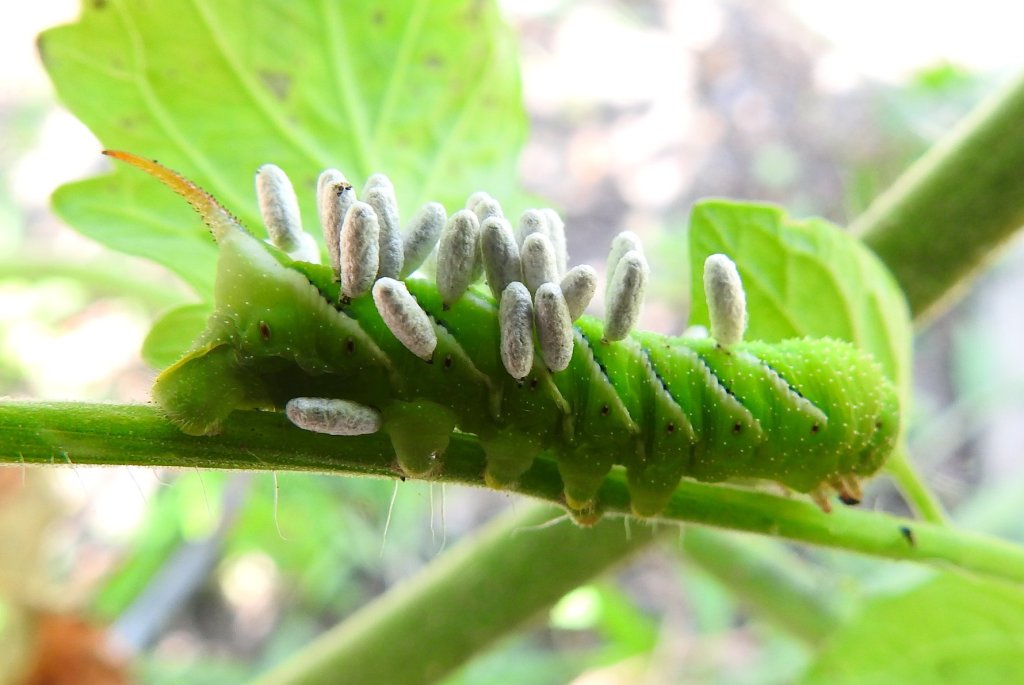
The one pictured above intrigued us, rather than causing concern. The fuzzy white things protruding from the body are the cocoons of Cotesia congregata, a braconid wasp that is a parasite of the caterpillar.
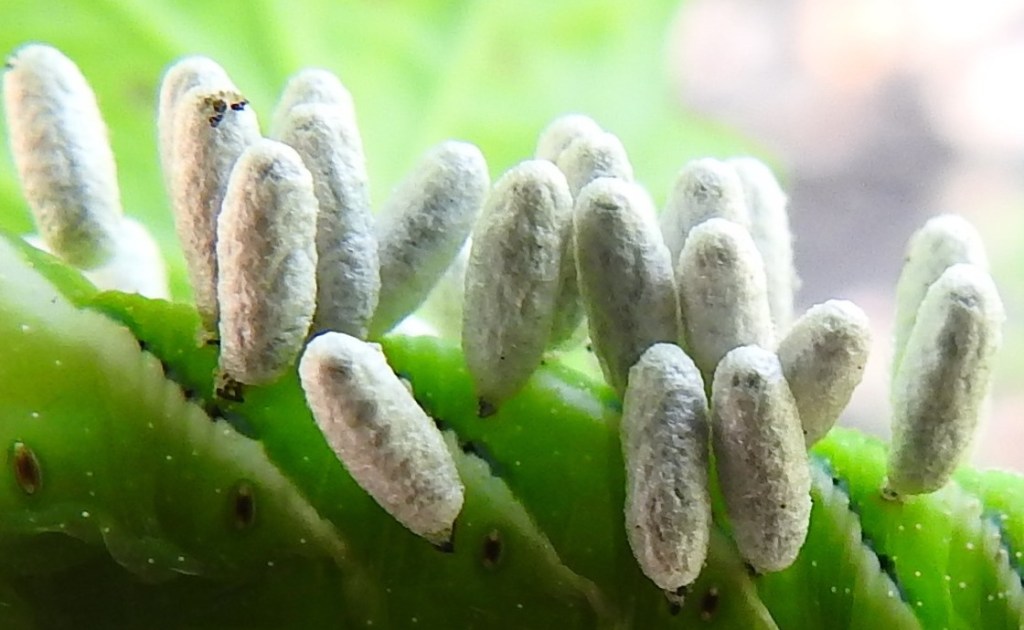
This particular caterpillar would not be with us much longer as the wasps were slowly killing it.
Another garden that we have is a “rain garden.” Here we have many wild plants growing. This includes a variety of goldenrods and asters. But we also have Common Milkweed. This is a plant that attracts Monarch butterflies but also a nice variety of other insects including several weevils, bugs, beetles aphids and the Milkweed Tussock Moth caterpillar.
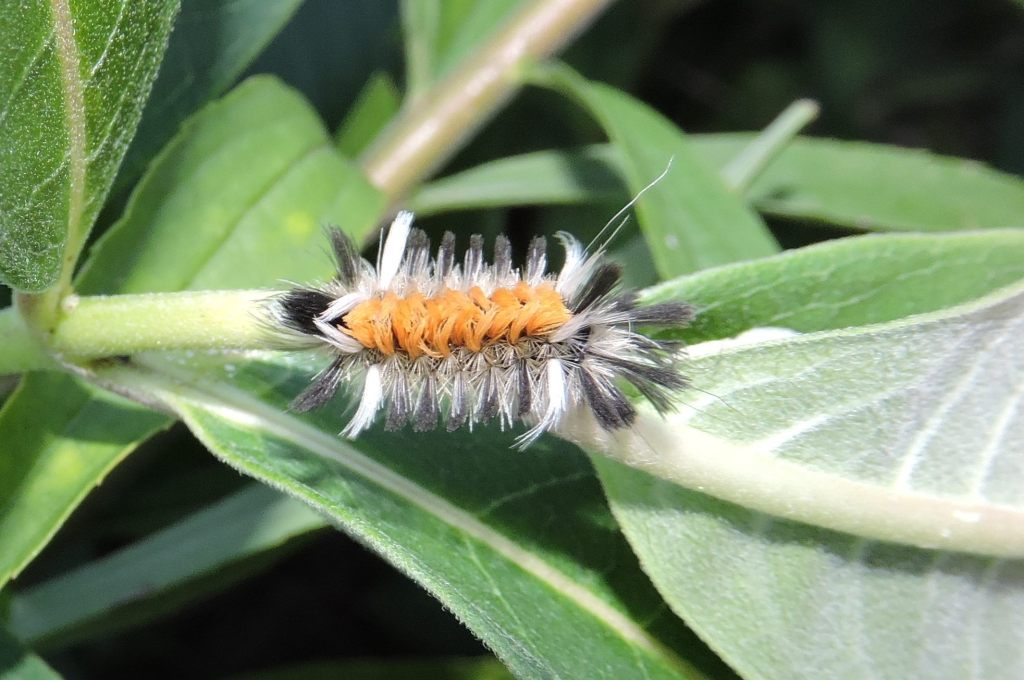
This caterpillar is a stunner, much less so as an adult moth.
As the occurrence of interesting insects always pleases me, it reminds me about teaching Entomology for Eastern Michigan University at the Fish Lake field station, north of Lapeer, Michigan. Recently, I was asked if I would be able to teach this course again next summer (2022) – to which I said “Yes!”
More on that later…
 Michael's Place